The Rhodan trolling motor is a heavy-duty bow-mount electric motor with integrated GPS anchor technology, made by Rhodan Marine Systems in Florida for saltwater anglers who fish demanding conditions. It holds your boat on a spot automatically using satellite positioning, is built with stainless steel components designed to resist coastal corrosion, and is engineered specifically for larger, heavier craft where standard freshwater-grade motors routinely fall short. If you fish bay boats, center consoles, or flats skiffs in tidal water and open coastal environments, the Rhodan is built for exactly that application.
Quick Summary
- GPS Anchor is the defining feature. Rhodan’s satellite-based position-hold system keeps your boat on a spot automatically — no physical anchor, no re-anchoring when the tide shifts.
- Built specifically for saltwater. Stainless steel components and sealed electronics address the corrosion failure modes that shorten the life of freshwater-focused motors in coastal environments.
- Designed for larger, heavier boats. Bay boats, center consoles, and larger inshore craft are Rhodan’s target platform — not kayaks, small jon boats, or light-duty freshwater rigs.
- Premium pricing reflects the build. The higher upfront cost is the trade-off for construction intended to hold up through several seasons in environments that destroy cheaper equipment quickly.
What Is a Rhodan Trolling Motor?
Rhodan Marine Systems is a Florida-based manufacturer that builds electric trolling motors for a specific type of angler: the serious saltwater fisherman who needs more than a mass-market motor can deliver. Their flagship product is the HD GPS Anchor series — a line of bow-mount electric motors combining high-thrust performance with integrated GPS positioning. The brand has built its reputation in the coastal fishing community by committing to one engineering philosophy: build heavy, use the right materials, and design for the environment the motor will actually face.
Some of the links in this article may be affiliate links. If you make a purchase through these links, we may earn a small commission at no extra cost to you. Thank you.
In the trolling motor market, Rhodan sits in the premium tier alongside Minn Kota’s Riptide and Ultrex series, Motorguide’s Xi5, and the Garmin Force. What differentiates Rhodan from those better-known names isn’t the basic functionality — GPS anchor, wireless remote, variable speed — but the depth of commitment to saltwater-specific engineering. Minn Kota and Motorguide serve both freshwater and saltwater markets and make design compromises accordingly. Rhodan built its entire product line around coastal conditions from the start, which means every material selection and sealing standard is made with salt air, spray, and tidal environments as the primary design requirement.
That focus means Rhodan doesn’t try to be everything for every angler. You won’t find the brand in the kayak category or on lightweight aluminum jon boats. The customer Rhodan builds for already knows what they need: a motor that handles regular saltwater punishment, holds a boat against tide and wind, and doesn’t corrode into replacement territory after two or three seasons. For that buyer, the brand has developed a genuinely loyal following over the years it has been operating.
What Makes the Rhodan GPS Anchor Feature Stand Out?
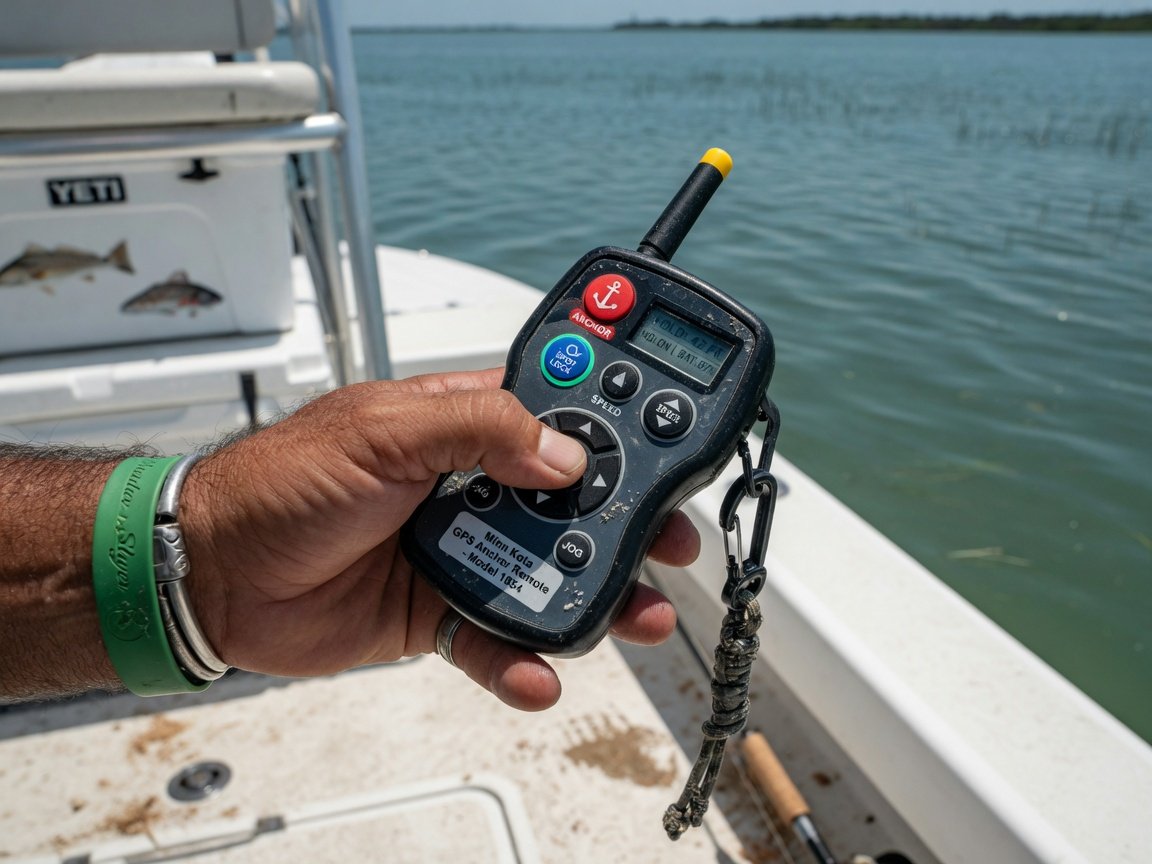
The GPS Anchor on a Rhodan motor uses satellite positioning to lock your current coordinates and hold the boat there automatically. You engage it from the wireless remote, and the motor adjusts its thrust and steering direction continuously to compensate for tidal current, wind pressure, and wave movement — without any further input from you. For saltwater fishing in tidal environments, that changes the entire approach to working a spot. You can set up on a reef edge, a channel mouth, or a shallow grass flat and fish it thoroughly without managing boat position constantly.
The practical advantage over a physical anchor comes down to three things. Physical anchors disturb the bottom in shallow water, create noise that spooks fish in clear saltwater environments, and fix you to a single coordinate regardless of where the fish move. GPS anchor holds you quietly, doesn’t disturb the substrate, and lets you reposition instantly from the remote if conditions shift or the fish move off the spot. For flats fishing where presentation and stealth are central to success, that difference is meaningful and immediate.
Rhodan’s wireless hand-held remote lets you engage and release GPS Anchor, make fine adjustments to the anchor position, and control motor speed from anywhere on the boat. The system is designed to hold against light to moderate current and wind; its effectiveness in heavier conditions depends on the motor’s available thrust relative to the load — as is true of any GPS anchor system regardless of brand. If you’re evaluating which GPS-equipped motor is right for your specific boat and budget, the full comparison of spot-lock trolling motors for 2026 covers the competitive field in detail.
How Is the Rhodan Built to Handle Saltwater?
Saltwater doesn’t just corrode metal — it attacks electrical connections, seizes hardware, and degrades composite materials faster than almost any freshwater environment. Rhodan’s construction addresses those failure modes directly through material selection and sealing standards that go well beyond what’s found in motors designed primarily for freshwater lakes. The motor shaft uses stainless steel rather than aluminum, a material choice that holds up significantly better under long-term coastal exposure. Motor head electronics are sealed to resist moisture intrusion from spray and submersion during launch and retrieval.
The design also accounts for the hardware failure modes most common on saltwater-exposed motors: seized mounting fasteners, oxidized wiring terminals, and degraded seals at the shaft collar. Rhodan uses hardware rated for marine environments and builds in access for the maintenance checks that prevent those failure modes from developing. The goal is a motor where consistent basic maintenance — primarily post-trip rinsing and annual inspection — is sufficient to maintain reliable performance for multiple seasons, rather than one where the salt environment is constantly winning the battle against the materials.
Owner feedback across coastal fishing forums and review platforms reflects this construction philosophy. Anglers who switch to Rhodan from using freshwater-oriented motors in saltwater environments frequently describe the Rhodan as feeling noticeably more substantial and report better durability over time in coastal use. That’s attribution to general owner experience rather than lab-measured data, but it is consistent across independent accounts and aligns with the documented material differences between saltwater-specific and general-market motor construction.
What Boats and Fishing Styles Is the Rhodan Designed For?
Rhodan builds its motors for larger, heavier saltwater fishing platforms. Bay boats in the 20- to 26-foot range, center consoles used for inshore and near-coastal work, larger flats skiffs, and offshore-capable inshore craft are the platforms Rhodan’s engineering addresses. If your boat is a lightweight kayak, a small aluminum jon boat, or a bass boat used on freshwater lakes, Rhodan is almost certainly more motor than your situation requires — in thrust capacity and purchase price both. But if you’re running a substantial saltwater platform in active tidal environments, the design fits the application closely.
The fishing styles where the Rhodan’s GPS Anchor and construction quality deliver the most value involve active tidal environments. Redfishing on shallow coastal flats, tarpon fishing along channel edges, working reef structure where current runs constantly, and targeting stripers or bluefish in tidal rivers and bays are all situations where hands-free position holding directly affects your ability to fish effectively. Repositioning by hand or managing anchor rope in those environments is a real limitation. GPS anchor removes it entirely.
Anglers who fish big, open coastal water in variable wind and chop also find the Rhodan’s construction appropriate. Running a 24-foot center console on a large bay in sustained wind requires a motor that can push consistently against that resistance without losing efficiency or overheating at moderate-to-high thrust levels for extended periods. For anglers specifically evaluating motors built for that kind of open-water challenge, the review of top trolling motors for big water fishing is a useful companion to this overview.
How Does the Rhodan Compare to Competing Motors?
The premium GPS anchor motor market has several strong competitors, and choosing between them depends on which design priorities match your fishing situation. The comparison below is based on manufacturer positioning, publicly documented features, and widely reported owner experience across each brand.
| Feature | Rhodan HD GPS Anchor | Minn Kota Riptide / Ultrex | Motorguide Xi5 (SW) | Garmin Force |
|---|---|---|---|---|
| Primary Market Focus | Saltwater / heavy-duty specialist | Broad market; dedicated saltwater (Riptide) and freshwater (Ultrex) lines | Broad market; dedicated saltwater version available | Tournament; deep Garmin navigation ecosystem |
| GPS Position Hold | GPS Anchor | Spot-Lock | Pinpoint GPS | Anchor Lock |
| Saltwater Construction | Purpose-built; stainless steel shaft and hardware throughout | Riptide line designed for saltwater; Ultrex is freshwater-primary | Saltwater version available with marine-grade materials | Built for saltwater use |
| Fish Finder / Chartplotter Integration | Limited | Limited (i-Pilot Link on compatible units) | Limited | Extensive — Garmin ecosystem only |
| Wireless Remote | Yes | Yes | Yes | Yes |
| Best Suited For | Saltwater heavy-duty use; large inshore and bay boats | Wide range; freshwater and coastal use | Wide range; coastal applications | Anglers in the full Garmin ecosystem |
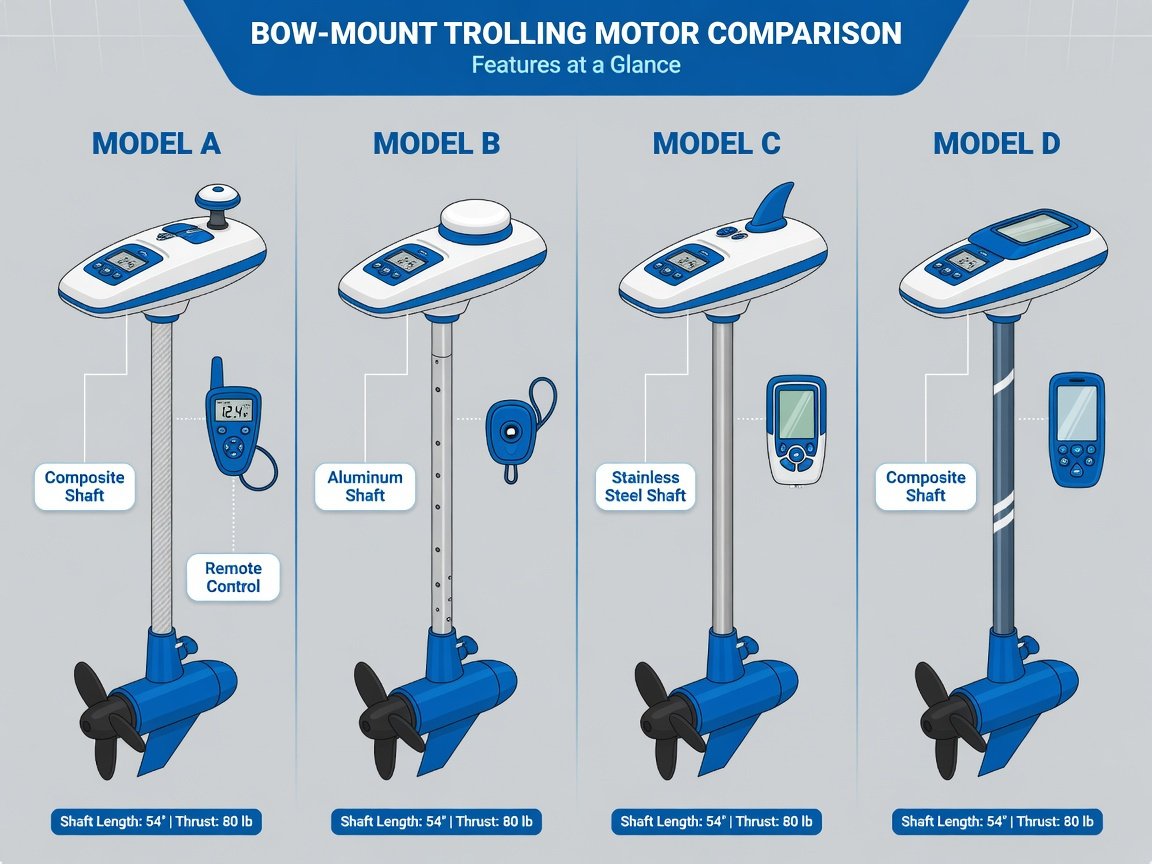
The key differentiator for Rhodan is its saltwater-first construction philosophy. If you’re running a full Garmin navigation setup, the Garmin Force offers chart plotter integration that Rhodan doesn’t currently match — setting anchor points on a screen, syncing with sonar, and integrating with autopilot is a real advantage in that ecosystem. But if saltwater durability and GPS anchor performance are your primary requirements and you’re not locked into a single navigation ecosystem, Rhodan competes strongly on those terms.
Minn Kota is the established market leader with the widest service and dealer network of the group, which matters for warranty claims and motor servicing in areas without a local Rhodan dealer. Motorguide offers a competitive GPS anchor system and solid saltwater models. Rhodan tends to stand out most in comparisons where buyers are specifically filtering for saltwater construction quality — for those buyers, the choice often narrows to Rhodan versus Minn Kota Riptide, where build philosophy and GPS anchor responsiveness become the deciding factors.
How Do You Choose the Right Thrust and Shaft Length?
Getting your thrust rating right is the most critical sizing decision you’ll make before buying. The standard industry guideline is a minimum of 2 pounds of thrust for every 100 pounds of fully loaded boat weight — hull, engine, fuel, batteries, gear, and passengers at realistic capacity. In saltwater with active tidal current or regular wind exposure, many experienced anglers size up to 3 or 4 pounds per 100 pounds. That headroom is what lets the motor maintain comfortable position in conditions that would push an undersized motor beyond its capacity.
Shaft length selection is equally important and often where anglers make their most consequential mistake. The goal is to keep the motor’s propeller at least 12 inches below the waterline in the conditions you fish. Too short and the prop exits the water in chop, causing cavitation and reducing thrust precisely when you need it most. Too long and you lose efficiency and risk striking the bottom in shallow saltwater environments. Measure from your bow motor mount to the waterline, add a minimum of 12 inches for the prop, and add more if you fish rough water regularly or your bow sits high.
Voltage selection — 24V versus 36V — follows from your thrust requirement. Higher thrust motors typically come in 36V configurations for the efficiency advantage at sustained high-load operation. If you’re on the borderline between thrust tiers, the 36V system gives you power headroom and more efficient battery use under demanding conditions. The detailed comparison of choosing between 12V and 24V trolling motor systems covers the key decision factors — the same logic applies directly to the 24V versus 36V choice.
What Does Installing a Rhodan Trolling Motor Involve?
Installing a bow-mount trolling motor is a manageable project for most anglers comfortable with basic tools and marine electrical work. The Rhodan mounts to your bow with the motor’s bracket system, and the wiring connects to your battery bank. Here’s what a standard installation involves from start to finish:
- Position the bow mount bracket. Place the bracket according to Rhodan’s specifications for your hull type. The motor needs to stow flat against the deck when folded and deploy cleanly over the water without obstruction.
- Secure hardware with marine-grade fasteners. Use stainless steel bolts and apply marine-grade sealant at any through-hull penetrations to prevent water intrusion and corrosion at the mount points.
- Route the motor cable cleanly. Run the power cable from the motor head along the gunwale to the battery compartment. Keep it clear of moving parts and sharp metal edges. Secure with marine cable clips or conduit to prevent chafing over time.
- Install a circuit breaker on the positive wire. Before reaching the battery, install a manual reset circuit breaker appropriately sized to Rhodan’s specified current draw for your model. This is a marine safety requirement — never omit it.
- Connect to the battery bank. Connect positive and negative leads to your battery terminals. Apply dielectric grease to all connections and use corrosion-resistant terminal covers.
- Test all basic motor functions. Power the motor on and verify forward, reverse, and steering through the full range of motion before testing GPS Anchor.
- Complete GPS Anchor calibration. Follow Rhodan’s calibration procedure from the manual — typically a GPS signal acquisition step followed by a heading initialization sequence. Allow adequate time for satellite lock before first use. Recalibrate at the start of each season or whenever positioning behavior seems inconsistent.
If you’re not confident in marine wiring practices and correct circuit protection sizing, professional installation is worth the cost. Rhodan’s high-thrust motors draw significant current at full power, and an undersized or missing circuit breaker creates a genuine fire hazard. This is not a step where approximation is acceptable.
Which Battery Setup Does a Rhodan Motor Need?
Your Rhodan’s battery requirement depends on its voltage system. A 24V motor needs two 12V batteries wired in series. A 36V motor needs three. Battery capacity — measured in amp-hours — determines your runtime at various throttle levels. In demanding saltwater conditions where the motor is pushing against current or wind at sustained moderate-to-high power, higher amp-hour capacity translates directly to more time on the water before needing to recharge.
Lithium batteries offer meaningful advantages over AGM in this application. At equivalent capacity, lithium is significantly lighter — a real consideration on saltwater boats where weight affects shallow-draft performance and fuel efficiency. Lithium also maintains voltage more consistently across the discharge curve, meaning the motor’s performance stays steadier through more of the charge cycle rather than dropping off as the battery depletes. The trade-off is a higher upfront cost, but longer cycle life and weight savings often make the economics work out favorably over several seasons of heavy saltwater use. The detailed analysis of trolling motor battery total cost of ownership runs through that math in full.
For 36V systems, purpose-built 36V lithium units are available that simplify wiring and reduce total battery weight compared to running three separate 12V batteries. These single-unit configurations are worth evaluating if space and weight are constraints on your boat. The current field of 36V lithium batteries for trolling motors covers the main configurations and capacity tiers available in the market today.
How Do You Keep a Rhodan Running Long-Term?
Rhodan’s saltwater-specific construction gives you a strong starting point, but it doesn’t replace consistent maintenance. The routine divides into what you do after every trip and what you do at the seasonal check.
After Every Saltwater Outing
- Rinse with fresh water. Flush the motor head, shaft, and propeller completely. Salt left on the hardware overnight accelerates corrosion on even purpose-built stainless steel components.
- Clear the prop shaft. Check for weeds, fishing line, or leader material wrapped around the shaft. These are common in coastal environments and can damage the shaft seal if left in place and allowed to dry.
- Treat exposed hardware. Apply a light coat of marine-grade corrosion inhibitor spray to exposed fasteners and hardware after rinsing. CRC 6-56 and similar marine products work well for this purpose.
Seasonal Inspection Checklist
- Inspect the propeller thoroughly. Check for nicks, cracks, and blade deformation from underwater strikes. A damaged prop reduces efficiency and increases load on the motor. The guide to identifying a failing trolling motor propeller covers the specific signs to look for.
- Check all wiring connections. Look for corrosion at terminals and loosening from vibration. Treat terminals with fresh dielectric grease; replace any showing significant oxidation.
- Inspect mounting hardware. Re-torque all bracket fasteners and replace any showing rust or wear. Bracket hardware on a saltwater boat absorbs significant stress across a full season of use.
- Test and recalibrate GPS Anchor. Run a positioning test before your first serious outing of each season. Recalibrate if holding behavior seems inconsistent or the heading initialization takes longer than expected.
- Check the shaft for straightness. Any hard bottom strike or impact event can induce a slight shaft bend that affects steering precision. Spin the shaft slowly by hand and watch for wobble at the prop end.
The manufacturer’s documentation available through the Rhodan Marine Systems website includes model-specific service schedules and is worth reading before your first season. For wiring inspections and installation work, the ABYC (American Boat and Yacht Council) publishes the relevant standards for marine electrical systems, including recommended gauge sizing and overcurrent protection requirements that apply to trolling motor setups.
Is a Rhodan Trolling Motor Worth the Investment?
For freshwater anglers, or those fishing small, lightweight boats in calm conditions, Rhodan offers more motor than the situation requires. Minn Kota and Garmin Force both provide strong GPS anchor capabilities in the freshwater and general inshore market with broader dealer networks, and Garmin offers tighter integration with chart plotters and navigation software than Rhodan currently matches. If ecosystem integration is your top purchase criterion, Garmin Force is the stronger choice regardless of where you fish.
For saltwater anglers on heavier boats, the economics look different over a multi-season ownership horizon. A motor built for saltwater that requires only routine maintenance for five or more seasons delivers a lower real cost than a cheaper motor that requires significant repairs or full replacement after two or three seasons in a corrosive environment. Rhodan’s repeat customers — anglers buying their second or third motor — tend to be people who have already learned that lesson on an earlier purchase.
Looking ahead to the next 12 to 24 months: the broader GPS anchor motor market is moving toward deeper integration between trolling motors and onboard navigation — setting anchor points from a chart plotter screen, following a programmed fishing track, and syncing motor behavior with sonar bottom data. Garmin is currently the leader in that integration, and Minn Kota is expanding i-Pilot Link capabilities. Rhodan’s next development phase will likely need to address the same connectivity expectations as that integration trend accelerates across the category. Battery technology improvement — particularly lithium options with better cold-weather performance for northern coastal markets — will also expand the practical use window for high-thrust saltwater motors running full-day sessions.
Your Next Steps
- Calculate your loaded boat weight accurately — hull, engine, fuel, batteries, gear, and passengers at realistic capacity. Use the result to identify the thrust range your conditions require.
- Measure bow height to the waterline on your specific hull. Add at least 12 inches for propeller depth; add more for rough-water use or high-bow hull designs.
- Choose your voltage system — 24V or 36V — based on the thrust tier your boat needs and the battery bank space you have available.
- Price the full system. Motor cost plus battery setup gives you the real upfront investment. Run the AGM versus lithium long-term cost comparison for your estimated annual use pattern.
- Contact Rhodan Marine Systems or an authorized dealer to confirm the right model for your hull and verify current availability and warranty terms before purchasing.
Frequently Asked Questions About Rhodan Trolling Motors
Is a Rhodan trolling motor good for freshwater use?
Yes — a Rhodan motor will function in freshwater. The saltwater-grade construction is simply overkill for most freshwater applications, which means you’re paying a premium for corrosion resistance and heavy-duty build quality that won’t be tested in a lake environment. For freshwater-primary use, Minn Kota, Motorguide, and Garmin Force offer competitive GPS anchor options that may represent better value for that specific application.
How does Rhodan GPS Anchor compare to Minn Kota Spot-Lock?
Both systems use satellite positioning to hold your boat’s location automatically, and both use wireless remotes for control. The functional capabilities are broadly comparable. The difference is context: Spot-Lock is available across Minn Kota’s wide product line including freshwater-only models, while Rhodan GPS Anchor is integrated into a motor designed specifically for saltwater heavy-duty use. Owner accounts in saltwater fishing communities describe both as effective position-holding systems. Rhodan’s advantage in that specific comparison is the underlying motor construction rather than the GPS anchor algorithm itself.
What maintenance does a Rhodan require after saltwater use?
After every saltwater outing: rinse the motor head, shaft, and propeller with fresh water; check the prop for wrapped fishing line or weeds; apply a marine-grade corrosion inhibitor to exposed hardware. Seasonally: inspect the propeller for damage, check wiring connections for corrosion, re-torque mounting hardware, and recalibrate GPS Anchor if needed. The routine is the same as for any saltwater trolling motor — Rhodan’s construction tolerates the environment better than average, but it doesn’t eliminate the need for the routine.
Can I use a lithium battery with a Rhodan trolling motor?
Yes. Lithium batteries are compatible with Rhodan motors and offer meaningful advantages: lower weight at equivalent capacity, more consistent voltage under load, and longer cycle life compared to AGM. Verify the battery’s voltage matches your motor’s system (24V or 36V), confirm the continuous discharge rating meets or exceeds the motor’s peak current draw, and ensure the battery’s BMS (battery management system) is rated for trolling motor use before purchasing.
What boats is a Rhodan motor best suited for?
Rhodan motors are best suited to larger saltwater fishing craft: bay boats in the 20- to 26-foot range, center consoles used for inshore and near-coastal work, larger flats skiffs, and similar heavy-duty platforms. The motors are designed for the thrust requirements and environmental demands of those applications. For smaller boats, kayaks, canoes, or light freshwater rigs, Rhodan is more motor — and more expense — than the situation calls for.
Does Rhodan offer a warranty on its trolling motors?
Rhodan Marine Systems offers a manufacturer’s warranty on their motors. Specific terms, coverage periods, and any conditions that affect warranty validity should be verified directly on the Rhodan Marine Systems website or confirmed with an authorized dealer at the time of purchase, as warranty terms can change between model years.
How long does a Rhodan trolling motor typically last?
Longevity depends heavily on maintenance consistency, usage intensity, and the conditions the motor faces. The saltwater fishing community’s reputation for Rhodan — built from owner accounts across fishing forums and review platforms — describes the motors as durable over multiple seasons when maintained properly. What is consistent across those accounts is that the construction quality outperforms cheaper alternatives in saltwater environments over time, provided the basic maintenance routine is followed reliably.