Like a bad tire on a highway, a failing trolling motor prop can quietly wreck your whole day on the water. We’ve all been there — sluggish speed, weird vibrations, mysterious noises. Sometimes it’s obvious. Often, it’s not. Knowing the difference between a minor issue and a full replacement situation saves you money and frustration. What we found might surprise you.
Warning Signs Your Trolling Motor Prop Is Failing
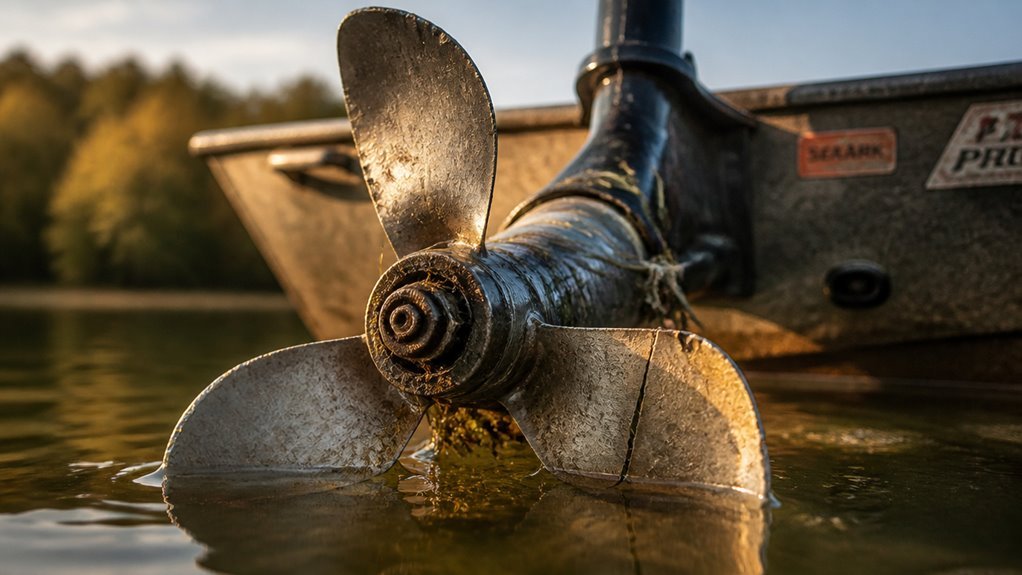
How do you know when your trolling motor prop is on its way out? Simple. Look at it. Cracks, chips, missing material — that’s irreversible damage staring right back at you. Replacement considerations become real fast when your blade looks like it survived a blender fight.
Some of the links in this article may be affiliate links. If you make a purchase through these links, we may earn a small commission at no extra cost to you. Thank you.
But visible damage isn’t the only red flag. Excessive vibration, weird noises, or losing speed despite revving hard? Your prop’s likely unbalanced or wrecked. Aluminum props wear out faster than you’d think, especially with heavy use. Stainless steel holds up better, but bends and cracks still happen.
Got rope tangled around the shaft? That overheats everything. Play or wobble on the shaft means poor installation or internal wear. Neither is good. Both are problems.
Regular inspections every 20 hours of use or daily can catch these issues early, preventing long-term damage and maintaining performance. Maintenance can help you spot nicks, dents, and bent blades before they become failures.
Physical Damage on a Trolling Motor Prop You Can’t Ignore
Sometimes a trolling motor prop makes the decision easy for you. The damage is obvious. You just have to look.
Here’s what demands immediate attention during blade maintenance and hub inspection:
- Cracks, bends, or missing chunks on blades — not subtle, not debatable
- Small dings or edge chips that quietly kill efficiency and spike vibration
- Thin or worn blades from repeated impacts or UV exposure, compromising structural strength
- Cracking or deformation near the hub or blade root, which can cause catastrophic failure under load
Corrosion and pitting deserve a mention too. They weaken the prop gradually — then suddenly. That’s how failures work. You won’t get a warning. The water doesn’t care about your fishing trip. Propeller integrity helps you assess when to replace before a failure, aligning with the broader idea that maintenance and care extend the life of saltwater trolling motors.
How Fishing Line Destroys Your Trolling Motor Prop
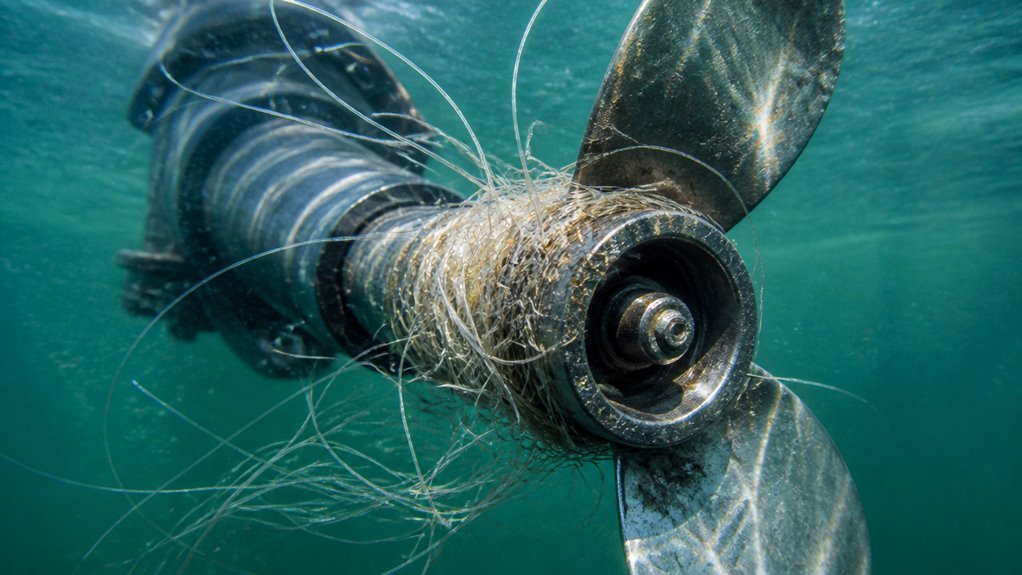
Fishing line is one of those quiet killers that sneaks up on you. One heavy trolling session. That’s all it takes. Line wraps around the shaft, generates heat, cracks seals, and suddenly you’ve got real prop damage on your hands.
Line buildup behind prop can also trap heat and contribute to water intrusion risk, further compromising performance and longevity.
| Problem | Consequence |
|---|---|
| Line wrapped around shaft | Cracked or broken seals |
| Restricted rotation | Excessive heat and stress |
| Line near seals | Accelerated seal wear |
| Line buildup behind prop | Water intrusion risk |
We’re not exaggerating. Fishing line quietly destroys efficiency, accelerates wear, and can cause outright failure during normal operation. Check behind the prop after every heavy fishing session. It takes thirty seconds. Ignoring it costs you a lot more than that. Regular inspections align with group guidance on electrical system maintenance and inspection, and help protect the overall health of your trolling motor. Tip from maintenance guidelines
What Shallow Water and Heavy Cover Do to Your Trolling Motor Prop
Shallow water and heavy cover are basically a prop’s worst nightmare — sand, silt, gravel, and thick weeds all accelerate wear and damage way faster than open-water use.
Striking the bottom repeatedly is a real risk, and dense vegetation adds serious blade strain that can bend or dull blades in a hurry.
We’d recommend inspecting the prop way more often when fishing shallow flats or heavy cover, because hidden underwater obstacles don’t announce themselves, and early damage caught fast beats a ruined prop found too late.
Regular maintenance and timely prop inspections help prevent corrosion and extend motor life, especially when you’re operating near abrasive substrates or in saltwater environments. prop maintenance
Shallow Water Prop Risks
If you’re running your trolling motor in shallow water, your prop is basically taking a beating every single time out. It’s not subtle damage either. Here’s what’s actually happening down there:
- Bottom strikes repeatedly slam the prop against sand, silt, or gravel.
- Abrasive materials grind down blade edges fast, killing efficiency.
- Dense vegetation bends, chips, or cracks blades under heavy strain.
- Vibration and performance loss follow quickly once blade wear sets in.
Regular inspections are essential in shallow flats or heavy cover, because increased exposure accelerates wear and any early signs of damage can save you from bigger failures later on. Corrosion-resistant materials and proper maintenance practices help ensure longer prop life and reliable performance in challenging environments.
Heavy Cover Blade Strain
Heavy cover doesn’t mess around with your prop — it straight-up destroys it. Dense weeds and thick vegetation aren’t just annoying. They’re actively bending, dulling, and wearing down your blade edges every single pass. We’re talking real blade strain here, not just surface scratches. The vegetation grabs, pulls, and torques those blades in ways they were never designed to handle. And it gets worse. Hidden debris tangled behind the prop amplifies the stress considerably, quietly wrecking efficiency while you’re focused on fishing.
Heavy cover also means sand, silt, and gravel are often nearby — abrading blades and grinding down seals faster than normal conditions ever would. The damage compounds quickly. Inspect that prop more frequently when you’re running through thick stuff. It matters.
Inspect Prop More Often
The bottom line is simple: fish shallow flats and heavy cover enough, and your prop’s going to take a beating. Insufficient maintenance makes everything worse. Here’s what’s actually happening out there:
- Bottom strikes on sand, silt, and gravel abrade propeller material, dulling blades and killing efficiency.
- Vibration increases after repeated strikes — that’s your early warning signal.
- Dense weeds strain blades constantly, accelerating wear faster than most anglers expect.
- Wrapped debris around the shaft causes overheating and seal damage if ignored.
Performance Problems That Signal a Bad Trolling Motor Prop
When a trolling motor prop starts going bad, our boat doesn’t exactly hand us a written notice. Unlike popular maintenance checks for electric versus gas motors, prop problems sneak up on us. Slow acceleration. Strange vibrations. Fuel costs climbing for no obvious reason.
| Performance Sign | What It Means |
|---|---|
| Sluggish acceleration | Pitch mismatch or damage |
| Reduced speed | Prop condition or wrong size |
| Unusual vibration/noise | Blade imbalance or improper install |
| Higher fuel costs | Increased drag from damaged blades |
Bent blades, corrosion, cracks — these aren’t cosmetic issues. They’re warning flags. A motor that “runs fine” but pushes the boat slower than usual? That’s the prop talking. Listen to it.
When Should You Replace vs. Repair Your Trolling Motor Prop?

Repair or replace? It’s the question nobody wants to deal with after a prop disaster. Here’s how we break it down:
- Severe damage wins. Broken blades, cracks, badly bent props — just replace it. Repairs won’t restore full integrity.
- Check the math. Repair costs hitting 50% of the prop’s value? Replace it. Simple.
- Match your new install properly. Motor thrust, voltage, manufacturer specs — all matter for efficiency and load.
- Material counts. Aluminum works occasionally. Stainless steel handles frequent punishment better.
After major impacts, visit a prop shop. Professional balancing prevents vibration damage down the road. Also, don’t skip warranty checks — sometimes damage is covered. Corrosion and visible wear deserve professional eyes before any decision gets made.
Frequently Asked Questions
What Does a Bad Boat Prop Look Like?
A bad prop’s got visible cracks, blade bending, or missing material. You’ll notice hull vibration, engine strain, and turbine noise. Follow a maintenance schedule and use prop shop tips to catch issues early.
How to Tell if a Prop Is Damaged?
We’ll know a prop’s damaged through key damage indicators: visible cracks, chips, bends, corrosion, or thinning blades. Regular propeller maintenance helps us catch excessive wear, debris buildup, or rust before they compromise performance.
What Does Propeller Cavitation Sound Like?
Like a kettle beginning to whistle, we’ll notice cavitation sounds as high-pitched chirping. Sound changes and blade distortion intensify this noise, especially at higher RPMs where bubbles violently collapse around our prop’s blades.
Can You Run a Boat With a Damaged Prop?
We can run a boat with a damaged prop, but we shouldn’t for long. Identifying wear early and tuning for efficiency helps us avoid reduced speed, poor handling, and potential internal damage.