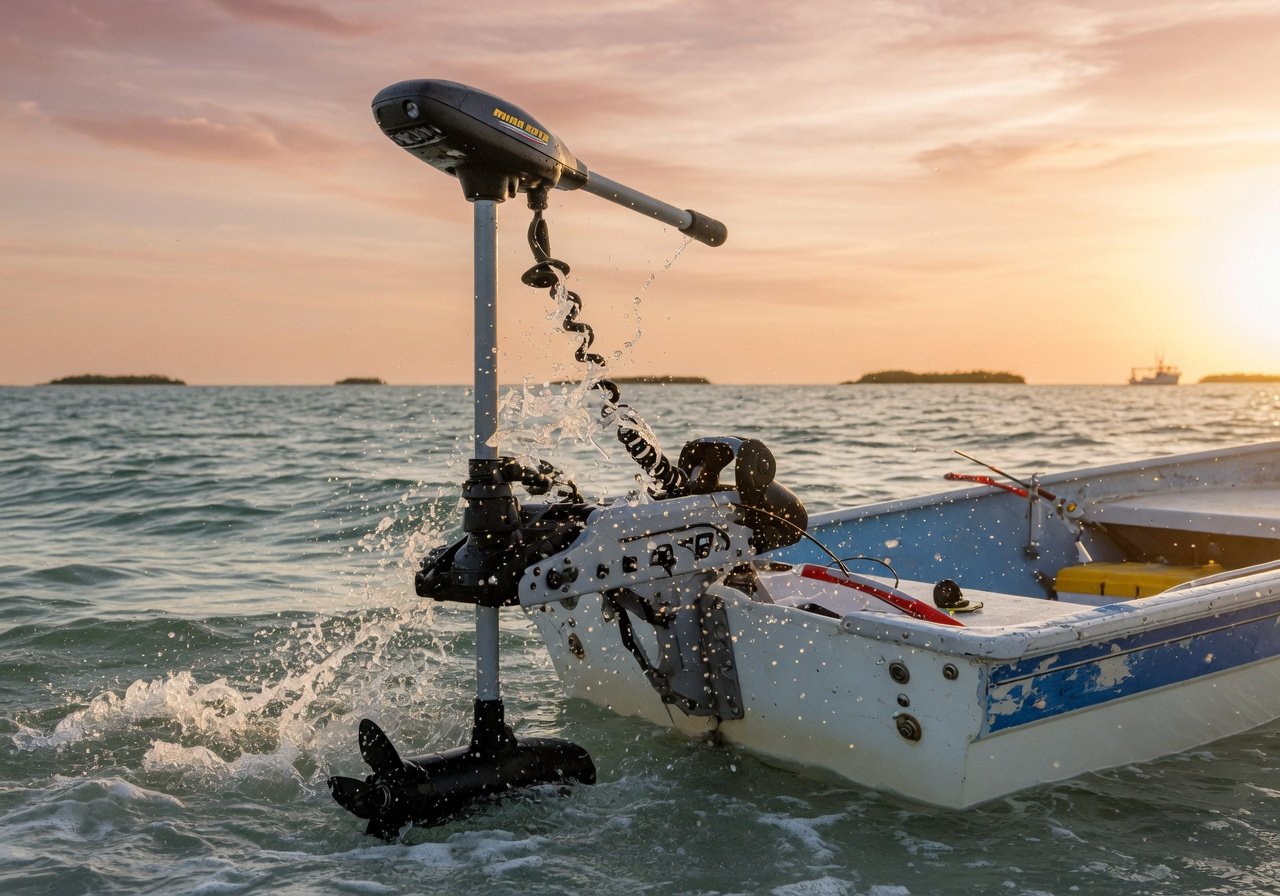
Yes, a freshwater trolling motor can physically run in saltwater — but it will sustain accelerating corrosion damage from the first use. Without saltwater-specific sealing, hardware, and coatings, the motor’s lifespan shortens dramatically. Whether it makes sense depends entirely on how often you fish in salt, how diligent your maintenance is, and what your motor is worth.
Some of the links in this article may be affiliate links. If you make a purchase through these links, we may earn a small commission at no extra cost to you. Thank you.
Here’s what you need to know before your next coastal trip.
Key Takeaways
- Saltwater is approximately 3.5% sodium chloride — far more electrically conductive than freshwater, which dramatically accelerates galvanic corrosion on unprotected metals.
- Saltwater-specific motors feature stainless steel hardware, sealed electrical connections, sacrificial zinc or aluminum anodes, and specialized corrosion-resistant coatings that freshwater motors simply lack.
- Most freshwater motor warranties are voided immediately upon saltwater use — Minn Kota, MotorGuide, and Newport Vessels all explicitly exclude it.
- With rigorous post-use rinsing and corrosion protection, some anglers have kept freshwater motors running in saltwater for 5–7 years — but this is the exception, not the rule.
- Budget saltwater-rated motors now start at under $200 (Newport Vessels NV-Series), making the upgrade more accessible than ever in 2026.
What Actually Happens When a Freshwater Motor Hits Saltwater?
The moment your freshwater trolling motor enters saltwater, an electrochemical process begins. Saltwater acts as a highly efficient electrolyte — it carries electrical current between dissimilar metals on your motor, triggering galvanic corrosion. This is the same process that causes ship hulls to pit and rust at accelerated rates compared to freshwater vessels.
On a freshwater motor, the lower unit shaft, propeller hardware, mounting bracket bolts, and electrical terminals are typically made of metals chosen for cost-effectiveness and freshwater durability — not saltwater resistance. Steel, aluminum alloys, and standard copper wiring all become vulnerable the instant they contact brine.
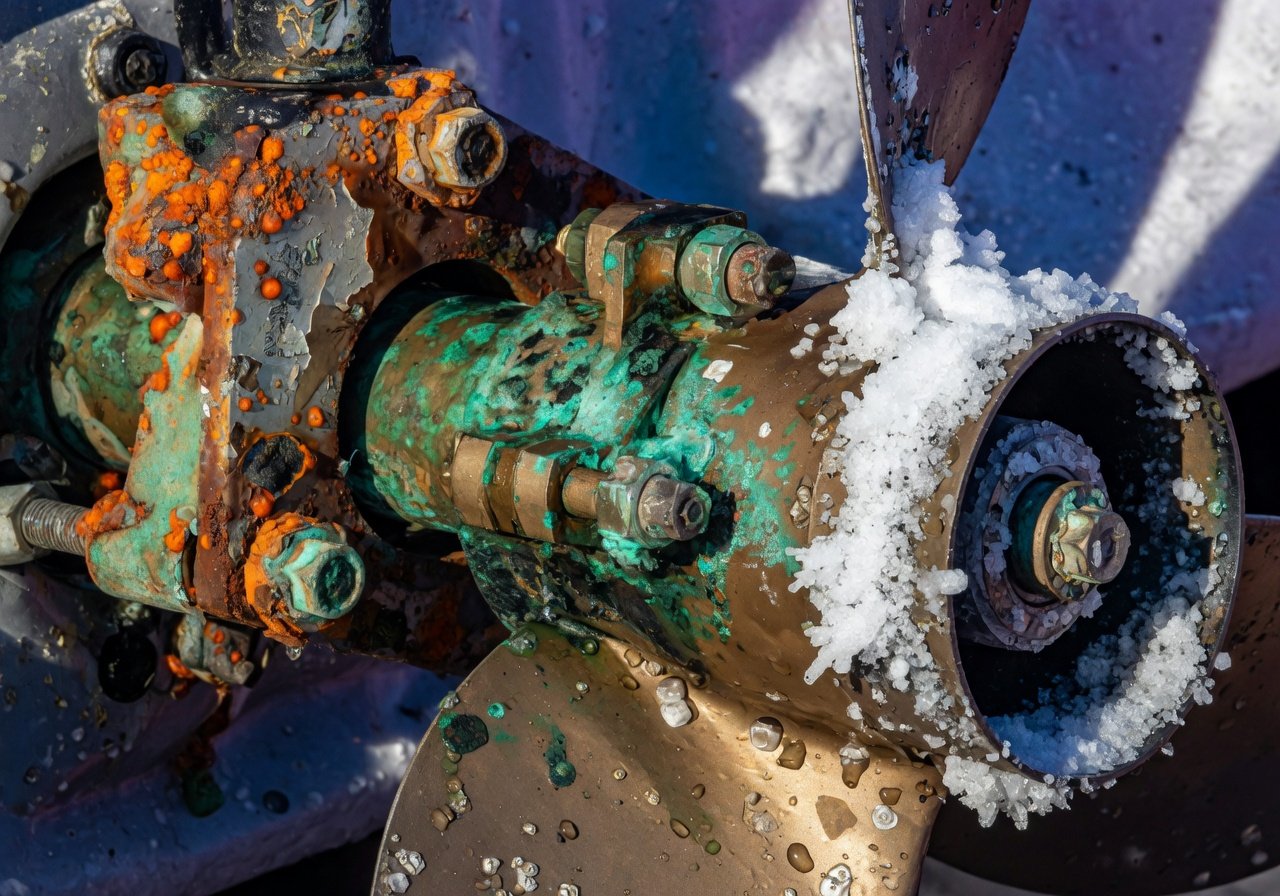
The damage isn’t always visible at first. Salt crystals embed in micro-gaps between components, in the propeller hub, around shaft seals, and inside electrical connectors. Over days without rinsing, those crystals draw moisture from the air and continue corroding long after the motor leaves the water. By the time you see surface rust or a failed seal, the internal damage is often already severe.
According to the team at Newport Vessels, even their saltwater-rated motors require a fresh-water rinse after every single use — and those motors are specifically built for the marine environment. For a freshwater motor, that rinse isn’t optional; it’s the difference between a season and a replacement.
How Are Freshwater and Saltwater Trolling Motors Different?
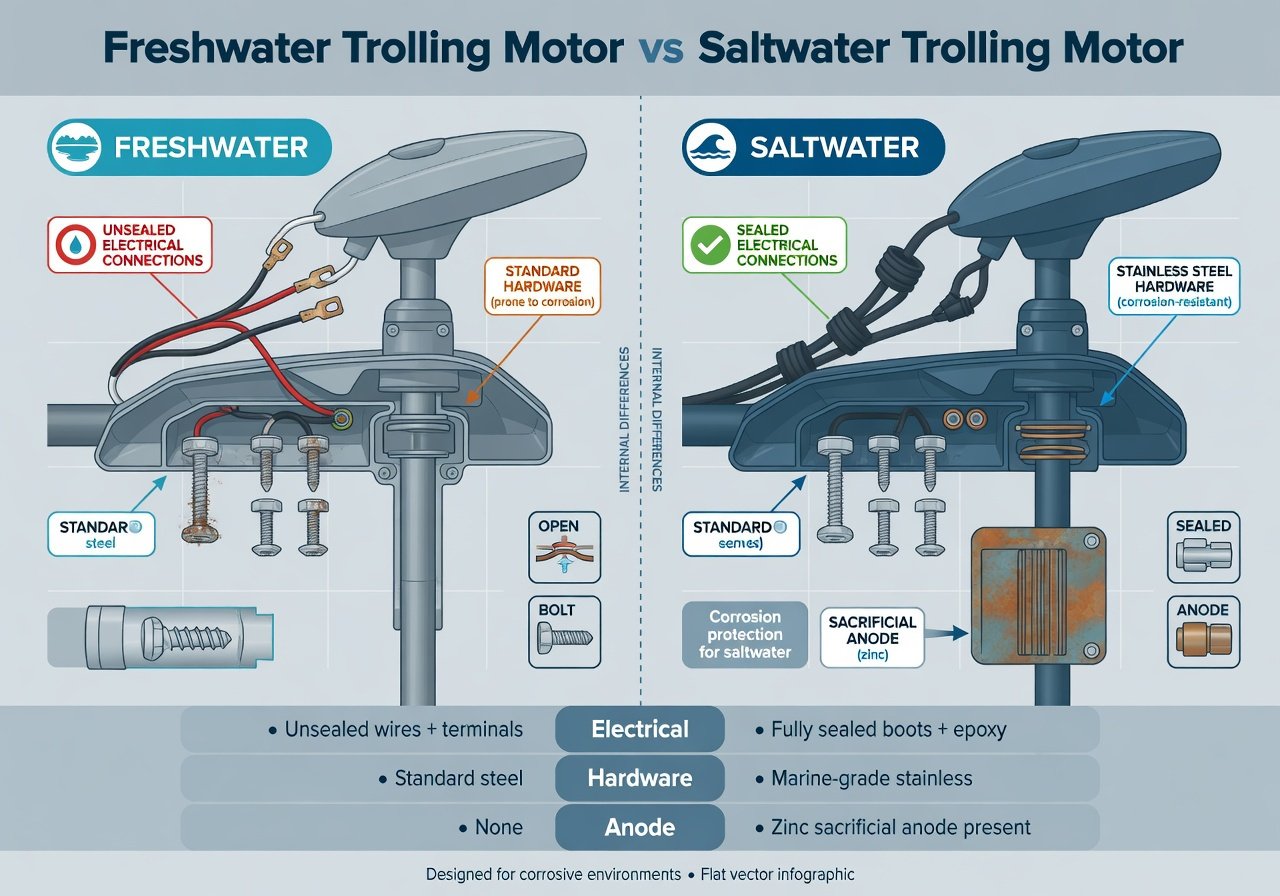
At a glance, freshwater and saltwater trolling motors can look almost identical. Same thrust ratings, same shaft lengths, same basic operation. But look under the hood and the engineering differences are significant — and directly relevant to whether your motor survives the sea.
| Feature | Freshwater Motor | Saltwater Motor |
|---|---|---|
| Hardware material | Standard steel / zinc alloy | Marine-grade stainless steel |
| Electrical connections | Standard terminals | Sealed, waterproofed terminals |
| Protective coating | Standard paint | Anodized / epoxy marine coating |
| Sacrificial anodes | None | Zinc or aluminum anodes fitted |
| Shaft material | Steel or fibreglass | Composite / carbon fibre reinforced |
| Warranty in saltwater | Voided immediately | 2-year coverage (Minn Kota Riptide) |
| Avg. entry price (55lb) | ~$150–$250 | ~$199–$430+ |
The single most impactful difference is the sacrificial anode. These small zinc or aluminum components are deliberately designed to corrode first, drawing galvanic corrosion away from your motor’s critical parts. Without them — as is the case with every freshwater motor — galvanic corrosion attacks the stainless or steel components directly. Minn Kota’s Riptide series, MotorGuide’s Xi5 Wireless, and Newport Vessels’ NV-Series all include this protection as standard. Your Bass Pro freshwater motor does not.
Sealed electrical connections are the second major difference. Saltwater intrusion into a motor’s wiring harness, speed controller, or terminal block causes short circuits, voltage drops, and ultimately motor failure. Saltwater motors seal these entry points with marine-grade gaskets and potted electronics. Freshwater motor electronics are protected against splash and rain — but not continuous saltwater immersion.
What Are the Real Risks of Using a Freshwater Motor in Saltwater?
The risk profile of running a freshwater motor in salt is well-documented across fishing forums, marine repair shops, and manufacturer service centers. It falls into four main categories, and each one can end your day — or your season — early.
Corrosion of metal components. This is the most obvious and immediate risk. Mounting hardware, shaft hardware, and propeller nuts begin corroding from first contact. Without stainless steel replacements, bracket bolts can seize within a season, making motor removal or adjustment dangerously difficult — especially in an emergency.
Seal failure. The propeller shaft seal and lower unit seals on a freshwater motor aren’t designed for constant saltwater exposure. Salt crystal buildup around these seals causes them to degrade and crack, allowing water intrusion into the lower unit housing. Once water reaches the motor windings, the motor is typically beyond economic repair.
Electrical corrosion and short circuits. Salt deposits inside wire connectors and terminal blocks create resistance and eventually corrosion-induced shorts. These can cause erratic speed control, complete motor failure, or — in worst-case scenarios — electrical fires. On a boat, mid-water electrical failure is a serious safety issue, not just an inconvenience.
Voided warranty and repair costs. Manufacturers can identify saltwater damage immediately during inspection. If your motor fails and you’ve been using it in saltwater, your warranty claim will be denied. Trolling motor repairs at an authorized dealer typically run $150–$400 — often more than the motor is worth if it’s an entry-level freshwater model.
How Quickly Does Saltwater Damage a Freshwater Trolling Motor?
Damage timeline varies significantly based on three factors: how often you use the motor in saltwater, whether you rinse it immediately after every outing, and what corrosion protection products you apply. Angler experience data paints a wide range of outcomes.
On the optimistic end, documented cases from boating forums show freshwater motors lasting 6–7 years in coastal saltwater environments with consistent, rigorous maintenance. One angler documented a Minn Kota running in Aransas Bay, Texas for multiple seasons with a 55lb Edge model — crediting a strict rinse-and-protect routine after every trip. The mounting hardware corroded first; the motor itself kept running.
On the pessimistic end, forum threads and repair shop reports describe motors with visible surface corrosion within 4–6 weeks of regular saltwater use without proper rinsing. A Minn Kota Ultrex — one of the most capable freshwater motors on the market — showed documented lower unit corrosion after approximately five years of periodic saltwater use, as reported in a long-term review by the LA Fish Blog.
The critical variable is what you do in the first hour after leaving the water. Salt left on a motor overnight in a humid coastal environment continues attacking metal surfaces even out of the water. If rinsing immediately after every trip isn’t realistic for your schedule, a freshwater motor is a poor choice for regular saltwater use.
Does Using a Freshwater Trolling Motor in Saltwater Void Your Warranty?
Yes — universally, across all major brands. This isn’t a gray area. Here’s where each major manufacturer stands:
Minn Kota states in its warranty terms (administered by Johnson Outdoors) that limited warranties do not apply to motors used in saltwater. The Riptide and Riptide Terrova series are the company’s designated saltwater lines and carry their own 2-year warranty specific to saltwater environments.
Newport Vessels explicitly lists storing or using motors in saltwater as an example of improper use that voids the warranty. Their NV-Series motor, however, is rated for saltwater and salt-fog environments and is sold as a dual-environment option.
Garmin (MotorGuide) maintains similar exclusions in its trolling motor warranty policy, with its Xi5 Wireless Saltwater series being the designated saltwater product line.
The practical implication is this: if your freshwater motor fails after even one saltwater outing — whether or not saltwater caused the specific failure — a service technician will identify corrosion and deny your claim. The burden of proving the failure was unrelated to saltwater exposure is virtually impossible once corrosion is present.
How Do You Protect a Freshwater Motor If You Must Use It in Saltwater?
Circumstances don’t always allow for the ideal choice. If you’re fishing saltwater with a freshwater motor — whether it’s a one-off trip or a temporary situation before upgrading — here’s the step-by-step protocol that gives your motor the best chance of surviving.
Executed consistently, this protocol has allowed some anglers to run freshwater motors in coastal environments for multiple seasons. But it requires commitment after every single trip — no exceptions. One missed rinse after a long day can undo weeks of careful maintenance.
How Do the Costs Compare — Freshwater vs. Saltwater Motor?
The price gap between freshwater and saltwater motors has narrowed considerably in 2026, making the upgrade argument stronger than it’s ever been. Here’s a realistic cost comparison based on current market pricing.
| Motor | Type | Thrust | Price (2026) | Warranty |
|---|---|---|---|---|
| Newport Vessels NV-Series | Saltwater-rated | 55lb | ~$199 | 2 years |
| Minn Kota Endura C2 | Freshwater only | 55lb | ~$200 | 2 years (FW only) |
| Minn Kota Riptide Transom | Saltwater | 55lb | ~$430 | 2 years (SW included) |
| MotorGuide Xi5 Wireless SW | Saltwater | 55lb | ~$950+ | 2 years |
| Minn Kota Riptide Instinct Quest | Saltwater (premium) | 90lb / 115lb | ~$2,000+ | 2 years |
The key insight from this table: Newport Vessels’ NV-Series offers a saltwater-rated motor at almost exactly the same price as a comparable freshwater model. At this price point, the argument for stretching a freshwater motor into saltwater is almost entirely gone. You’re essentially paying the same money for less protection.
For anglers who mix their fishing — mostly freshwater with occasional saltwater trips — the calculus is more nuanced. A saltwater-rated motor will function perfectly in freshwater (the reverse is much more survivable than vice versa). If you’re splitting your time between environments, the dual-environment capability of saltwater-rated motors makes them the logical choice regardless of frequency.
Which Saltwater Trolling Motors Are Worth Upgrading To in 2026?
If the cost comparison above has pushed you toward upgrading, here are the saltwater trolling motors that represent the best value at each price tier in 2026.
Best Budget Option: Newport Vessels NV-Series (~$199)
The Newport Vessels NV-Series is the most accessible saltwater-rated trolling motor on the market. It lacks GPS integration and a network interface, but it delivers genuine saltwater protection — sealed electronics, corrosion-resistant lower unit — at an entry-level price. For kayak anglers and small-boat inshore fishermen who don’t need anchor lock or autopilot, this is the obvious choice.
Best Mid-Range: Minn Kota Riptide Transom (~$430)
The Riptide Transom offers proven Minn Kota reliability with full saltwater engineering — stainless hardware, sealed motor, and the brand’s 2-year saltwater warranty. It’s a straightforward upgrade for anglers moving from a Minn Kota freshwater model who want familiar controls and brand support.
Best GPS-Enabled: MotorGuide Xi5 Wireless Saltwater (~$950+)
The MotorGuide Xi5 Wireless Saltwater combines GPS anchor lock with a time-tested saltwater design, available in shaft lengths from 48 to 72 inches and voltage options from 12V to 36V. It’s the motor that launched the serious GPS saltwater trolling market and remains one of the most versatile options available — fitting everything from kayaks to mid-size center consoles.
Best Premium: Minn Kota Riptide Instinct Quest (2024+, ~$2,000+)
Redesigned for 2024, the Riptide Instinct Quest is Minn Kota’s flagship saltwater offering. Its shaft is reinforced with carbon fiber, the lower unit is anodized aluminum, and it ships in 24V/90lb or 36V/115lb configurations. For serious offshore anglers and tournament fishermen who demand the best, this is the benchmark product in the category.
What Do Experienced Saltwater Anglers Actually Say?
Online fishing communities — from The Hull Truth forums to Microskiff.com — have debated this question for years. The consensus from anglers who’ve actually run freshwater motors in coastal environments is nuanced and worth hearing.
The pattern across hundreds of forum discussions is consistent: anglers who succeed with freshwater motors in saltwater are the exception — and they’re the exception because they treat motor maintenance as a non-negotiable post-trip routine. The majority of anglers who try it without that discipline see their motors degrade within one to two seasons.
Experienced coastal fishing guides — who run motors daily in harsh conditions — universally use saltwater-rated motors. The math for professionals is simple: equipment failure costs more in lost charters than the price difference between a freshwater and saltwater motor. That same logic applies to any angler who fishes saltwater with meaningful frequency.
What Does the Future of Saltwater Trolling Motors Look Like in 2026–2027?
The trolling motor category is evolving rapidly, and several trends are directly relevant to the freshwater-vs-saltwater debate.
Brushless motor technology is arriving in the saltwater segment. Brushless motors offer substantially higher efficiency, longer service life, and fewer mechanical wear points than brushed motors. As these units reach saltwater-rated products in 2026 and beyond, the longevity gap between saltwater and freshwater motors will widen further — making the case for a proper saltwater motor even stronger.
Corrosion-resistant materials are improving. Carbon fiber shafts, advanced anodizing processes, and polymer composites are replacing more corrosion-prone metals in premium saltwater motors. The Minn Kota Riptide Instinct Quest’s carbon fiber shaft is the clearest current example. As these materials reach lower price tiers, even entry-level saltwater motors will offer dramatically better corrosion resistance.
Budget saltwater options are multiplying. Competition in the sub-$300 saltwater motor space is intensifying in 2026. Newport Vessels, Watersnake, and emerging brands are bringing saltwater-rated motors to price points that used to be occupied exclusively by freshwater models. This trend is the single biggest force eroding the practical argument for running a freshwater motor in saltwater.
Smart integration is becoming standard. GPS anchor lock, autopilot, and app connectivity — once premium features — are migrating into mid-range saltwater motors. As these features drive value in the saltwater-specific segment, the functional gap between saltwater and freshwater motors grows beyond just materials and sealing.
Frequently Asked Questions
Can I use my Minn Kota freshwater trolling motor in saltwater?
Technically yes — it will run. But Minn Kota explicitly voids the warranty on all non-Riptide models used in saltwater. Without the stainless hardware, sealed electronics, and sacrificial anodes of the Riptide series, your motor will sustain accelerating corrosion with each saltwater outing. For occasional inshore trips with rigorous rinsing, some anglers manage this successfully. For regular saltwater use, Minn Kota’s own Riptide line is the correct product.
What is the difference between a saltwater and freshwater trolling motor?
The core differences are materials and sealing. Saltwater motors use marine-grade stainless steel hardware, sealed and potted electrical connections, corrosion-resistant anodized or epoxy coatings, and sacrificial zinc or aluminum anodes. Freshwater motors use standard steel hardware, unsealed connections, and standard paint — none of which are designed to withstand the corrosive electrolyte environment that saltwater creates.
How do I protect a freshwater trolling motor when using it in saltwater?
The minimum protocol: rinse the entire motor — especially the lower unit and propeller hub — with fresh water immediately after every use. Apply a marine corrosion inhibitor spray to all exposed metal. Remove and rinse under the propeller. Replace mounting hardware with 316 marine stainless steel. Store dry. Use SaltAway or similar product to remove stubborn salt deposits. Miss any of these steps regularly, and damage accumulates quickly.
Can a saltwater trolling motor be used in freshwater?
Yes, without any issues. Saltwater motors are over-engineered for freshwater environments — their stainless hardware, sealed electronics, and protective coatings simply aren’t stressed in freshwater. If you primarily fish freshwater but occasionally venture into salt, a saltwater-rated motor is the correct choice: it works perfectly in both environments. The reverse is not true.
How long will a freshwater motor last in saltwater?
It depends almost entirely on maintenance discipline. With zero maintenance, visible corrosion appears within weeks. With rigorous rinsing, corrosion protection sprays, and stainless hardware upgrades, documented cases show freshwater motors lasting 5–7 years in coastal saltwater environments. However, these outcomes are the exception. Most freshwater motors used regularly in saltwater without consistent maintenance degrade significantly within one to two seasons.
Is it worth buying a saltwater trolling motor instead?
For most saltwater anglers in 2026, yes. The Newport Vessels NV-Series brings saltwater-rated protection to around $199 — nearly the same price as a comparable freshwater motor. At that price point, the cost argument for stretching a freshwater motor into salt largely disappears. For anglers with larger boats needing higher thrust, the Minn Kota Riptide Transom at ~$430 offers brand reliability and a valid saltwater warranty. A single repair on a corroded freshwater motor typically costs more than the upgrade would have.
The Bottom Line: Should You Use a Freshwater Motor in Saltwater?
The answer is: only if you have no alternative — and only with a strict, non-negotiable maintenance routine. Freshwater trolling motors can technically operate in saltwater, and some anglers have managed the challenge successfully for years. But the engineering reality is clear: they’re not built for it, the warranty won’t protect you, and the damage accumulates from the first trip.
In 2026, the argument for running a freshwater motor in salt is weaker than it’s ever been. Entry-level saltwater-rated motors start at under $200. The maintenance burden of protecting a freshwater motor in salt is substantial. And the repair costs when corrosion wins — which it eventually will — often exceed the cost of a proper upgrade.
If you’re fishing saltwater with any regularity, the smartest move is a one-time upgrade to a motor built for the environment. Your motor will last longer, your warranty will be valid, and you’ll spend far less time rinsing and treating and far more time fishing.
Occasional saltwater use (1–3 trips/year): Your freshwater motor is fine with the 7-step maintenance protocol above.
Regular saltwater use (monthly+): Upgrade to Newport Vessels NV-Series (~$199) or Minn Kota Riptide Transom (~$430).
Heavy saltwater use / tournament fishing: MotorGuide Xi5 Wireless SW or Minn Kota Riptide Instinct Quest — nothing less.