We’ve found that mastering bass fishing starts with knowing your target. Largemouth prefer shorelines with cover in murky waters, while smallmouth thrive in rocky, moving streams. Beginners should grab a medium-action spinning combo, pack some plastic worms and crankbaits, and adjust techniques with the seasons. Spring calls for aggressive presentations in shallows, while summer fishing works best at dawn and dusk. Let’s hook into the specific techniques that’ll fill your livewell in no time.
Where to Target Largemouth vs. Smallmouth Bass
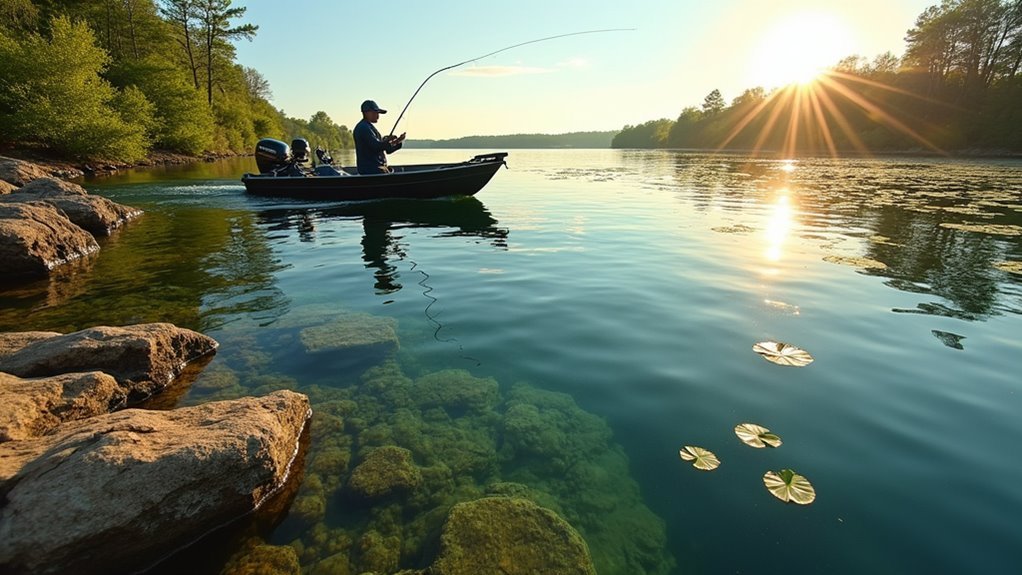
When heading out for a day of bass fishing, knowing exactly where to look can make the difference between coming home with stories or just sunburn. We’ve learned this lesson many times!
Some of the links in this article may be affiliate links. If you make a purchase through these links, we may earn a small commission at no extra cost to you. Thank you.
Largemouth bass love shorelines with structure and shallow, murky waters. They’re homebodies, preferring stagnant areas where they can ambush prey.
Smallmouth, on the other hand, are river runners. They thrive in moving water, gravitating toward rocky bottoms and gravel flats. We’ve had our best smallmouth days fishing eddies and current breaks in streams.
Essential Gear for the Beginning Bass Angler
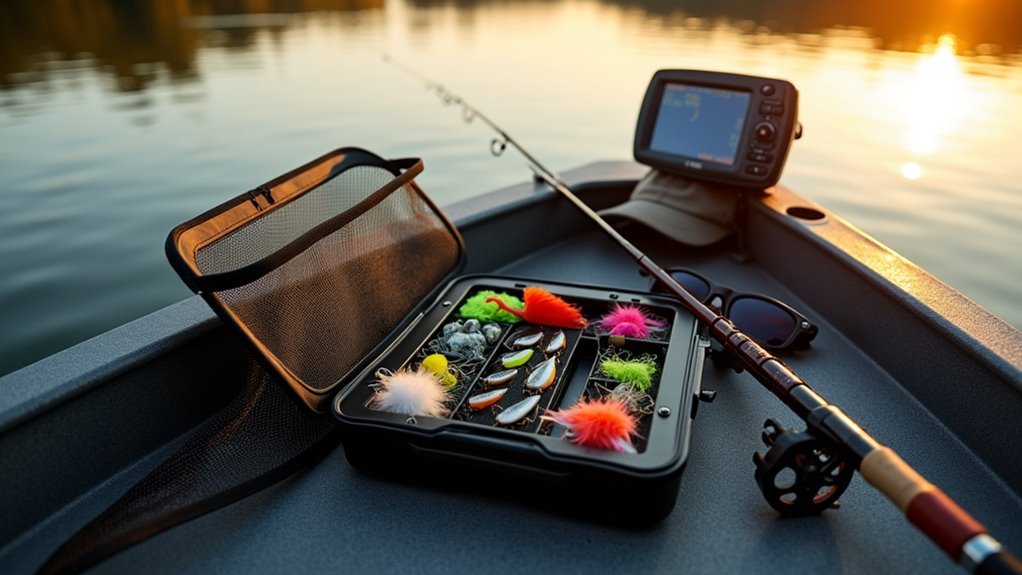
Although diving into the bass fishing world can seem overwhelming at first, assembling your starter gear doesn’t need to break the bank or require a fishing degree. We’ve outfitted countless newbies who’ve gone on to become passionate anglers.
Start with a medium-action spinning rod and reel combo – they’re forgiving when you’re learning. Grab a tackle box with some basic lures: plastic worms, crankbaits, and spinnerbaits. Don’t forget line (8-12 pound test works well), hooks, weights, and needle-nose pliers.
Remember my first setup? Just a $30 combo that landed me a 4-pounder on my third cast!
Seasonal Bass Fishing Strategies
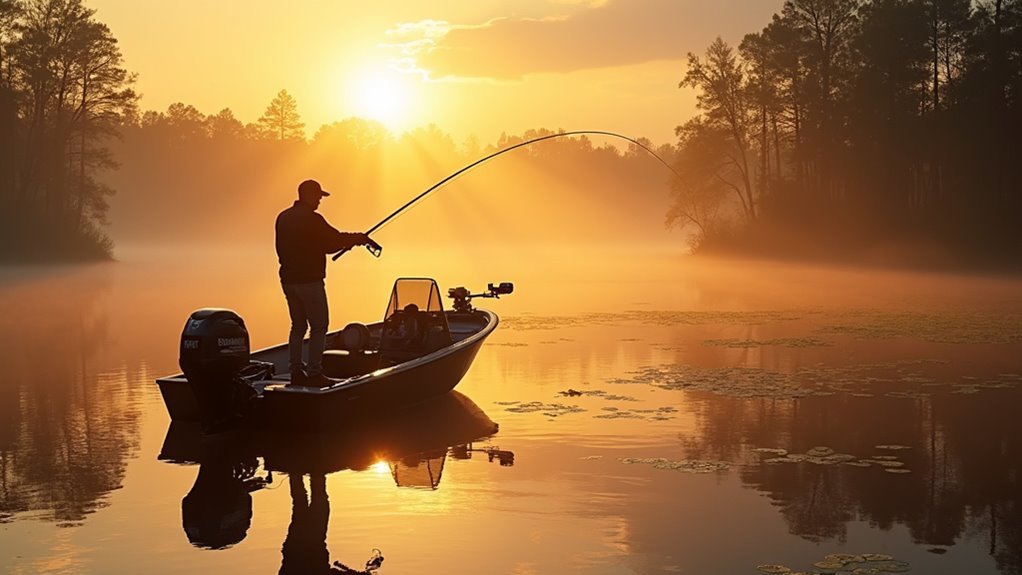
Four distinct seasons mean four unique approaches to catching bass. We’ve learned that spring brings bass to the shallows for spawning—perfect for aggressive presentations. In summer, hit the water early morning or late evening when bass are active during low pressure periods.
Come fall, it’s time to downsize lures and line as bass slow down. Color selection becomes essential now. Winter calls for slow-moving jigs and spoons—those fast lures won’t cut it anymore. Even when ice fishing, we target the same structure as open water: weed beds and cover where those lunkers hide.
Top Lures and Rigs for Bass Success
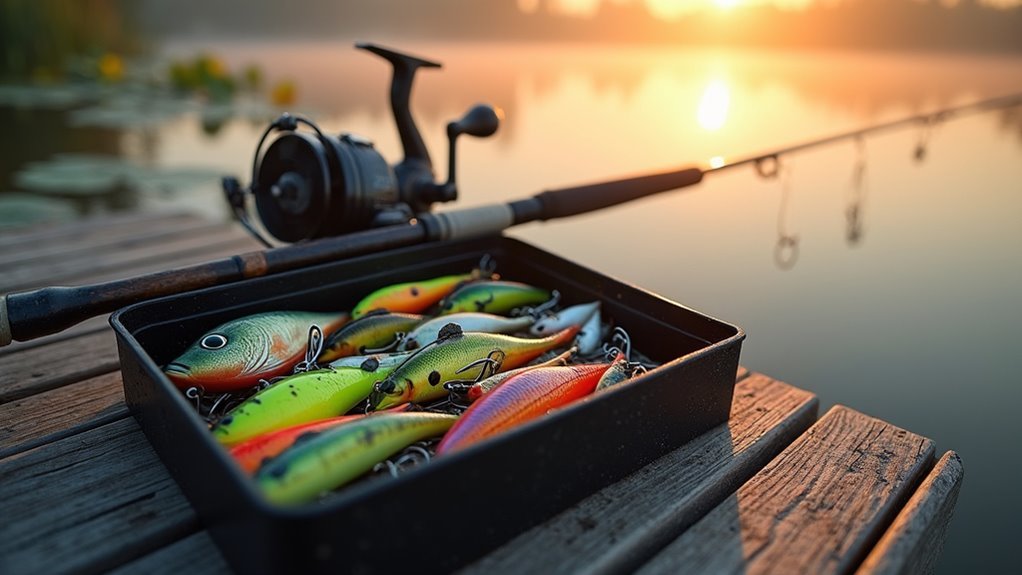
The right lure or rig can make all the difference between coming home empty-handed or with a cooler full of bass. We’ve found Carolina Rigs absolutely deadly when paired with soft plastics – they present bait naturally while the weight’s reflection attracts curious fish.
For smallmouth, we swear by Berkley PowerBait tubes. We once landed three 4-pounders in an hour using them on a rocky point!
Don’t overlook the Texas Rig for heavy cover or the Drop Shot when fish are finicky. The Wacky Rig, though strange-looking, has saved many slow days on still water for us.
Mastering Fishing Techniques for Different Water Conditions
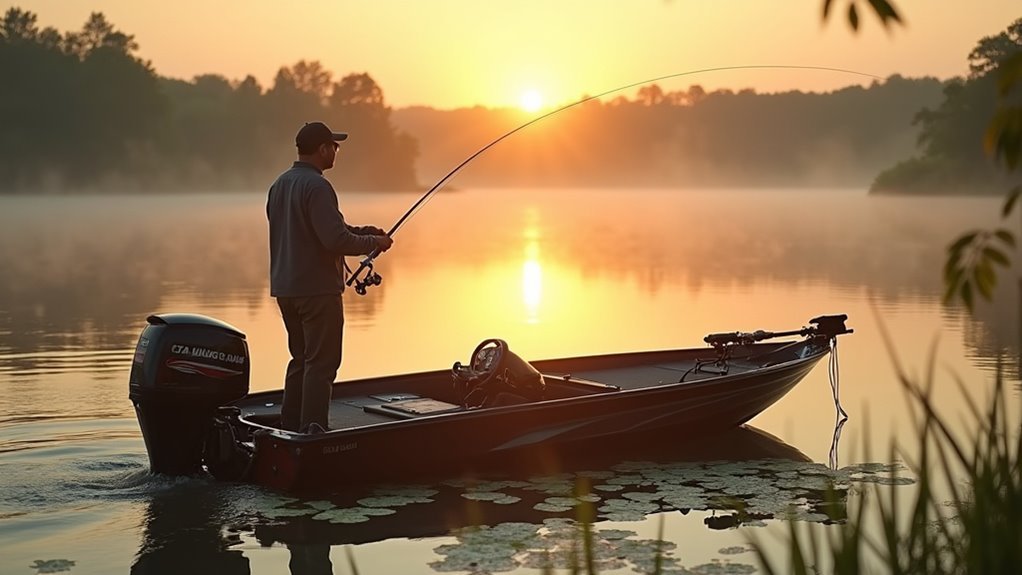
Water conditions dictate bass behavior more than almost anything else, which is why we’ve learned to adapt our techniques accordingly. In murky water, we’ve found that noisy lures and those with bright colors work wonders – bass rely more on vibration and flash when visibility is poor.
For clear water, we scale down with finesse techniques. Those smallmouth love rocky bottoms in moving water, while largemouth prefer the calm shallows with structure. We once caught a monster bass in a thunderstorm using a spinnerbait – the pressure change had them feeding aggressively! Additionally, understanding environmental compensation can significantly improve your ability to maintain course and catch more bass in challenging conditions.
Understanding Bass Behavior and Feeding Patterns
Beyond just mastering techniques for various water conditions, we’ve learned that understanding what makes bass tick is a game-changer on the water. Bass behavior follows predictable patterns tied to seasons and feeding instincts.
In spring, they’ll move to warmer shallows for spawning—that’s when aggressive presentations shine. Summer finds them active during low pressure periods, especially at dawn and dusk. Come fall, they slow down, so size down your lures accordingly.
From Lake to Plate: Preparing Your Bass Catch
After landing that prized bass, many anglers face the crucial question of what to do next if they plan to enjoy their catch for dinner. We’ve found that proper preparation makes all the difference in taste.
Start by gutting, scaling, and thoroughly washing your bass. Then master the art of filleting—it takes practice, but you’ll get better each time. Many folks worry about bass tasting muddy, but that largely depends on where you caught it.
Remember to check local regulations before keeping your catch. Most areas have specific seasons and size requirements that we all need to respect.
Building Your Bass Fishing Community
Three key elements make bass fishing more rewarding than just the catch itself: friendship, shared knowledge, and community. We’ve found that joining local fishing clubs or online forums connects you with fellow anglers who’ll gladly share their favorite spots and techniques.
Last summer, our group taught a newcomer how to use a Carolina rig, and he landed a 5-pounder his first try! That’s what it’s all about. Attend tournaments as a spectator first, then participant. Volunteer at conservation events. The bass fishing community welcomes everyone with open arms—whether you’re catching trophies or just enjoying the water. Additionally, understanding battery management strategies can help ensure your equipment remains reliable during fishing trips.
Frequently Asked Questions
How Do Bass Respond to Different Moon Phases?
We’ve observed that bass become more active during full and new moons, when they often feed aggressively. During quarter moons, they’re typically less active, requiring us to slow our presentations and fish deeper water.
Can Bass See Color, and Does Lure Color Matter?
Like underwater detectives, we’ve found bass can indeed see colors, but water clarity’s the real game-changer. In clear water, match natural prey colors; in murky conditions, we’ll want bold, high-contrast lures that create a silhouette.
What’s the Best Time of Day for Trophy Bass?
We’ve found dawn and dusk are prime times for trophy bass fishing. Early morning (before sunrise) and late evening offer reduced light, cooler temperatures and less boat traffic—conditions when big bass feel comfortable feeding aggressively.
How Does Barometric Pressure Affect Bass Fishing Success?
We’ve found bass are most active during stable or slowly falling barometric pressure. When pressure drops rapidly before storms, they feed aggressively. After pressure rises post-storm, they often become lethargic and harder to catch.
Why Do Bass Sometimes Follow Lures Without Striking?
While it may seem frustrating, bass often follow lures when they’re curious but not hungry. We’ve noticed they might be cautious, evaluating the lure’s realism, or simply investigating movement without feeling the need to strike.
Conclusion
We’ve found that bass fishing success isn’t just about expensive gear or secret spots—it’s about understanding these incredible fish and their environments. Recent studies confirm what we’ve seen firsthand: bass respond more to presentation than fancy lures. As you hit the water with these techniques, you’ll develop your own style. Remember our morning at Lake Wilson when that 8-pounder hit on a simple plastic worm? That’s the magic of bass fishing—it rewards patience, knowledge, and adaptability. Tight lines, friends!