There’s a theory that the best freshwater prop is simply the most expensive one—and that’s mostly wrong. Material, pitch, blade count, and even your local elevation all factor in. Aluminum bends so you don’t blow your lower unit. Stainless steel screams on open water. Neither’s perfect for every situation. We’re breaking down exactly what separates a good prop from a great one.
Aluminum vs. Stainless Steel: Which Freshwater Prop Material Wins?
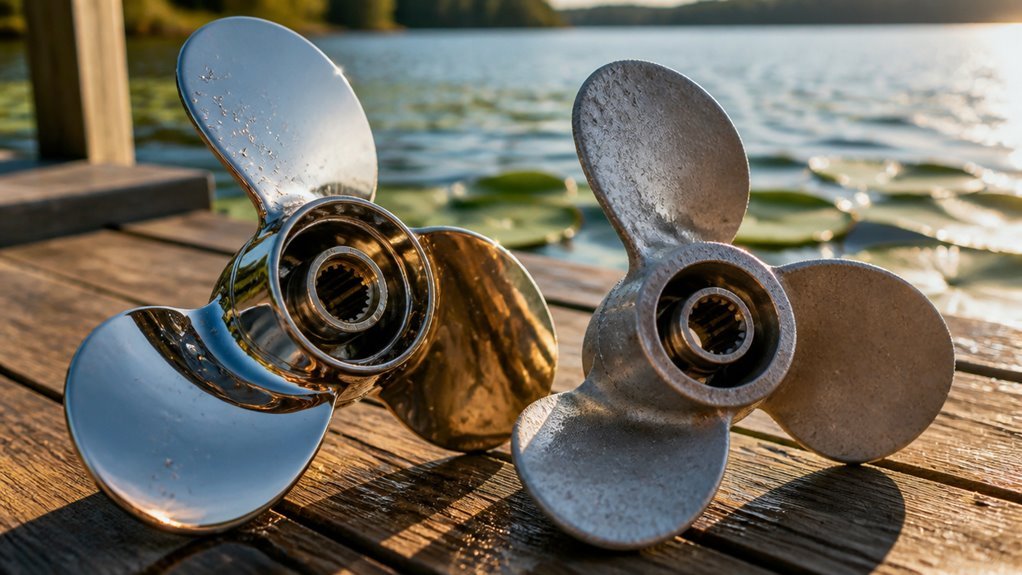
When it comes to freshwater props, material matters more than most boaters think. We’re talking aluminum durability versus stainless efficiency — and both have real trade-offs.
Some of the links in this article may be affiliate links. If you make a purchase through these links, we may earn a small commission at no extra cost to you. Thank you.
Aluminum props are cheap, common, and fixable. They’ll bend or shear on impact, which can actually protect your lower unit. Not glamorous, but practical.
Stainless steel? Thinner, stiffer, and genuinely impressive. We’re talking 1–3 mph top speed gains and up to 15% better fuel efficiency. They last longer under regular use too. The catch — they transfer impact straight to your drivetrain. One bad hit and you’re looking at serious damage.
Rocky water? Stainless holds up better. But plenty of boaters keep an aluminum spare onboard. Smart. Because material choice really does come down to how, where, and how often you’re running. Regular maintenance, such as inspecting and cleaning propeller connections and ensuring proper voltage and current flow, can help protect your propulsion system propeller maintenance and extend performance.
How Pitch and Diameter Affect Your Freshwater Prop’s Performance
It’s how far the prop theoretically moves forward in one revolution. That’s pitch. Simple concept, massive impact. Higher pitch means more speed potential, but your engine works harder for it. Lower pitch? Better hole-shot, higher RPM. Classic trade-off.
Understanding your pitch goals matters out on the water. Carrying props with different pitches lets you adapt to elevation changes, heavy gear loads, or extra passengers. Smart move.
Now, diameter impact is equally real. Bigger diameter generally increases thrust. Four-blade props with higher DAR — around 60-65% — generate serious thrust at lower RPM, making planing noticeably smoother.
Prop size reads diameter first, then pitch. A 14×17 means 14″ diameter, 17″ pitch. Know your numbers. Period. Additionally, matching your propeller to your trolling motor’s voltage and thrust range helps maximize efficiency and battery life thrust-to-weight ratio.
3-Blade vs. 4-Blade: Which Freshwater Prop Fits Your Boating Style?
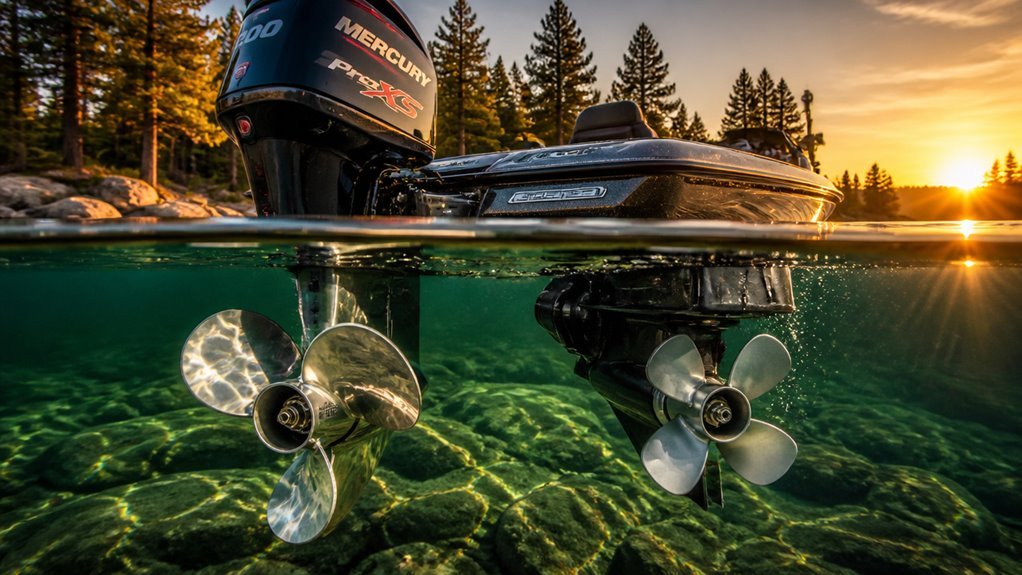
How many blades actually matter? More than you’d think. Blade selection genuinely changes how your boat performs on the water. Three-blade props win on top-end speed and lighter weight — solid all-around performers for general freshwater use. Simple, effective, done. Regular inspections and maintenance help prevent failures and keep performance consistent, especially in freshwater environments. propeller maintenance
How Boat Weight and Elevation Change Your Freshwater Prop Choice
Blade count isn’t the only thing messing with your prop choice. Weight impact is real — load up your boat with gear and passengers, and suddenly your RPM tanks. More weight means more drag, plain and simple. You’ll likely need lower pitch or extra blades just to keep your hole shot from dying. Not ideal, but that’s physics. Elevation effects hit just as hard. At 7,000 feet, you’re already losing roughly 20% engine output. That’s not a rumor. Drop your pitch to recover lost RPM, or watch your engine struggle embarrassingly. Here’s the blunt truth: conditions change constantly. Carry a spare prop or use a modular hub system. Check your WOT RPM every time something shifts. Adjust accordingly. No shortcuts here. Remote-controlled trolling motors with GPS spot-lock and autonomous features can help maintain position and optimize efficiency when operating in variable conditions GPS spot-lock and route-tracking capabilities.
How to Use Mercury’s Prop Selector for Freshwater Recommendations
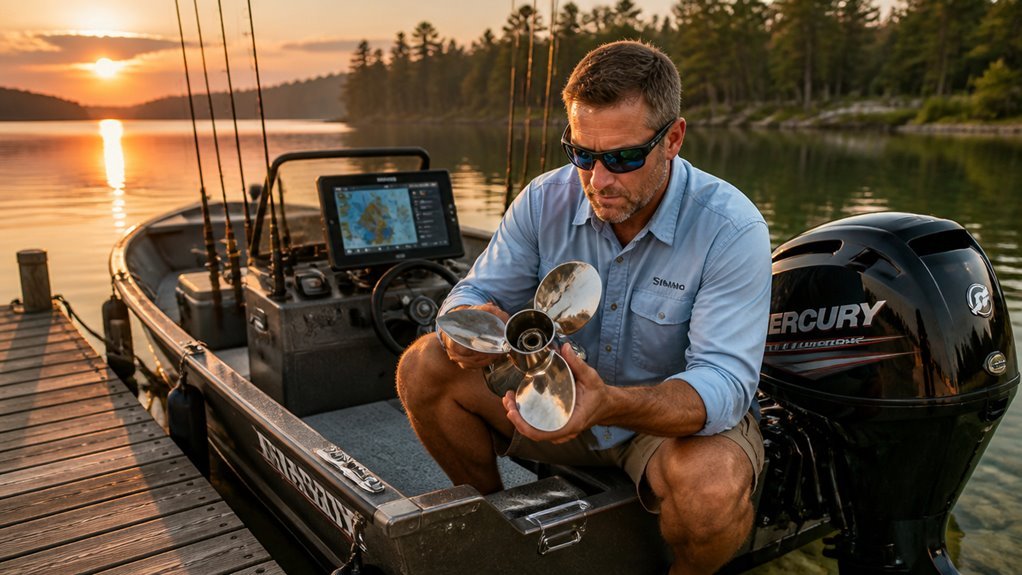
Tired of guessing which prop to buy? Mercury’s Prop Selector on MercuryMarine.com handles the heavy lifting. Find it under Propellers. Input your boat type, usage, and engine details. Done. It spits out a recommended prop family and helps nail the correct pitch using real performance data. No magic. Just freshwater optimization built around your specific setup. Regular recharging and maintenance practices extend overall battery lifespan. Voltage stability matters for smooth rides and safety.
Frequently Asked Questions
Is a 19 or 21 Pitch Prop Faster?
A 21-pitch prop’s generally faster for top-end speed. Through propeller testing, we’ve found it boosts boat performance by covering more distance per revolution, though it sacrifices quick acceleration compared to a 19-pitch.
What’s Better, an Aluminum or Stainless Steel Prop?
Seriously, selecting stainless steel suits us best for aluminum versus stainless comparisons — it’s thinner, stiffer, and boasts superior corrosion resistance, boosting speed and fuel efficiency, though we’d recommend keeping an affordable aluminum prop as your spare.
What’s Better, a 3 or 4 Blade Prop?
For most boaters, we’d say a 3-blade prop wins in our discussion ideas around prop selection—it delivers better top-end speed. But if you need quicker hole shots, we’d consider a 4-blade.
What Prop Makes Your Boat Faster?
Like a sports car on the highway, stainless steel props make your boat faster—we’re talking 1–3 mph gains. Despite competitor pricing being higher, you’ll also enjoy better fuel economy overall.