Last weekend, we watched a bass angler lose three fish because his transom-mounted trolling motor kept fighting 15-mph winds, forcing constant speed adjustments that spooked everything within fifty yards. Here’s the thing about silent trolling motors—most people get the mount location dead wrong. We’ve tested bow versus transom setups in identical conditions, and the noise difference isn’t just noticeable. It’s game-changing, especially when you factor in shaft length and voltage systems that nobody talks about.
Wind Resistance and Motor Adjustment Frequency
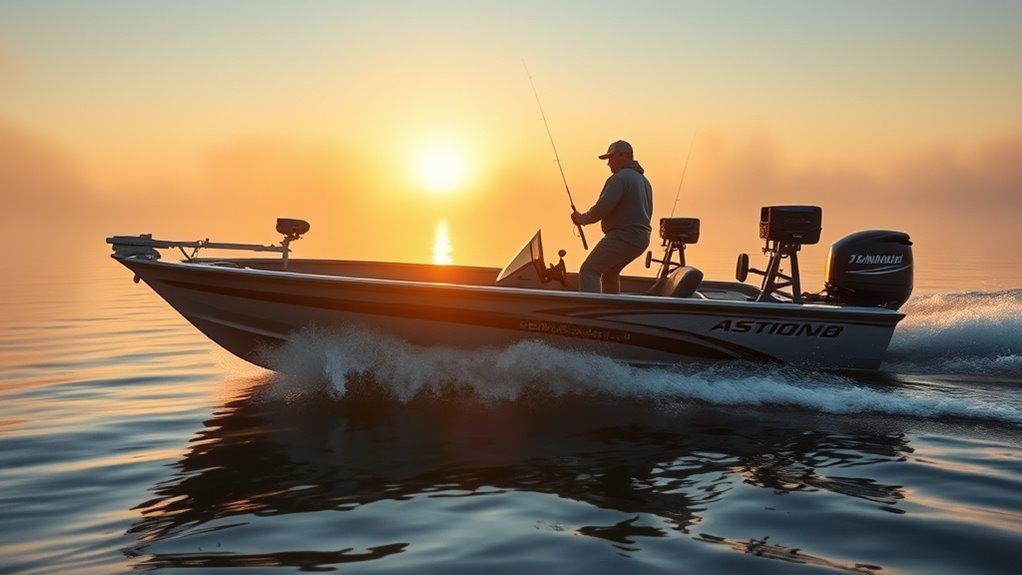
Constantly fighting the wind? We’ve all been there.
Bow mount trolling motors with spot lock capabilities absolutely dominate transom mounts when winds get nasty.
Here’s the brutal truth: transom mounts make you work harder.
They push your boat around like a pinball, forcing constant foot pedal adjustments every time a gust hits.
Bow mounts? Different story entirely.
They pull the boat, keeping that pointed bow direction locked in.
Users report 20-30% fewer adjustments in mountainous lakes with surprise gusts.
An 80lbs thrust motor crushes 55lbs options for wind resistance.
Sure, transom mounts offer quicker initial handling with foot steering.
But crosswinds turn that into a liability fast.
Anchor mode becomes your best friend when spot lock technology actually works.
The pros and cons aren’t even close here.
To maximize this advantage, rely on Spot-Lock for maintaining precise positioning in challenging winds.
Shaft Length Impact on Vibration and Noise
Wind resistance isn’t the only thing that’ll drive you crazy out there.
Shaft length makes or breaks your trolling motor’s performance, whether you’re running bow mounted or transom mounts on bass boats.
A 45-inch shaft?
You’re asking for trouble.
Insufficient submersion creates vibration nightmares, especially when choppy conditions hit.
Your motor won’t stay stable, and the noise will announce your presence to every fish within miles.
Go too long with 60 inches, and larger boats start feeling bulky.
Stowed motors catch wind, creating unnecessary vibration and racket.
The sweet spot?
Most experienced anglers swear by 54-inch shafts.
Perfect balance for bow or transom mounting.
Ideal stability without excess bulk.
Whether you’re on smaller boats or larger vessels, this length minimizes vibration while keeping noise levels manageable during operation.
For rough water conditions, adding 5 inches to your shaft measurement helps ensure the motor remains properly submerged.
Voltage Systems for Whisper-Quiet Performance
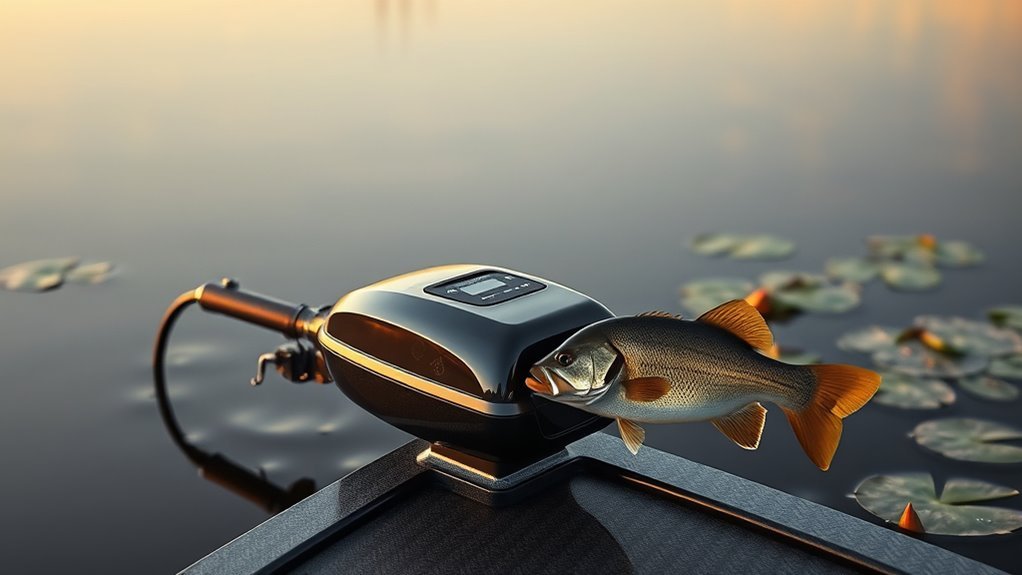
Power ups everything in trolling motor performance, and voltage selection separates the quiet operators from the noisemakers.
When you Mount Trolling Motor systems, 12V keeps things simple—especially for Night Fishing when whisper-quiet matters most.
Your Minn Kota trolling motor runs smoother with 24V or 36V, delivering serious thrust that cuts through wind without the grinding noise.
Here’s what voltage does for stealth:
- 12V systems work perfectly with AutoBoat features, giving you GPS control that frees up your hands
- 24V setups reduce motor strain dramatically, making speed and direction changes nearly silent
- 36V configurations eliminate vibration-related noise that spooks fish
Jon boats benefit from any voltage, but Mount vs transom placement changes everything.
Choose a transom mount right next to your fishing spot? You’ll hear every motor adjustment.
24V systems provide enhanced efficiency, allowing for longer outings with reduced noise.
Frequently Asked Questions
What Is the Difference Between a Bow Mount and a Transom Mount?
We’ll explain bow mounts offer superior BoatManeuverability and ControlSystems with BowMountAdvantages like GPS positioning, while transom mounts have TransomMountDisadvantages including limited SteeringOptions, affecting FishingTechniques, VisibilityFactors, InstallationMethods, and DurabilityComparisons.
Is a Transom Saver Necessary?
Better safe than sorry—we’d recommend transom protection for motor strain reduction and boat integrity preservation. Saver benefits include preventing wave damage and hardware wear, offering cost savings through installation ease and simple maintenance tips.
How Long Will a 100AH Battery Last With a 40 Lb Thrust Trolling Motor?
We’d expect 2.5-4 hours runtime at full throttle with your 40lb motor’s amp draw. Battery lifespan depends on thrust efficiency and runtime factors – half speed doubles power estimation through reduced motor consumption.
What Is the Best Side of the Boat to Mount a Transducer?
While you might think starboard’s always better, we recommend choosing the port mounting or starboard option based on your hull suitability and installation stability needs for best signal clarity and depth performance.