Mastering redfish fishing requires understanding their coppery-scaled appearance and that distinctive tail spot. These opportunistic feeders typically gather in small packs near structures like oyster beds and grass flats. Anglers should equip a medium-action rod with 3000-size reel and braided line. Technique adjustment is essential – try bottom fishing with Carolina rigs, mid-water popping corks, or topwater lures at dawn. Always respect size limits (18-27 inches) and practice catch and release. The following strategies will transform occasional catches into consistent success.
Understanding Redfish Behavior and Identification
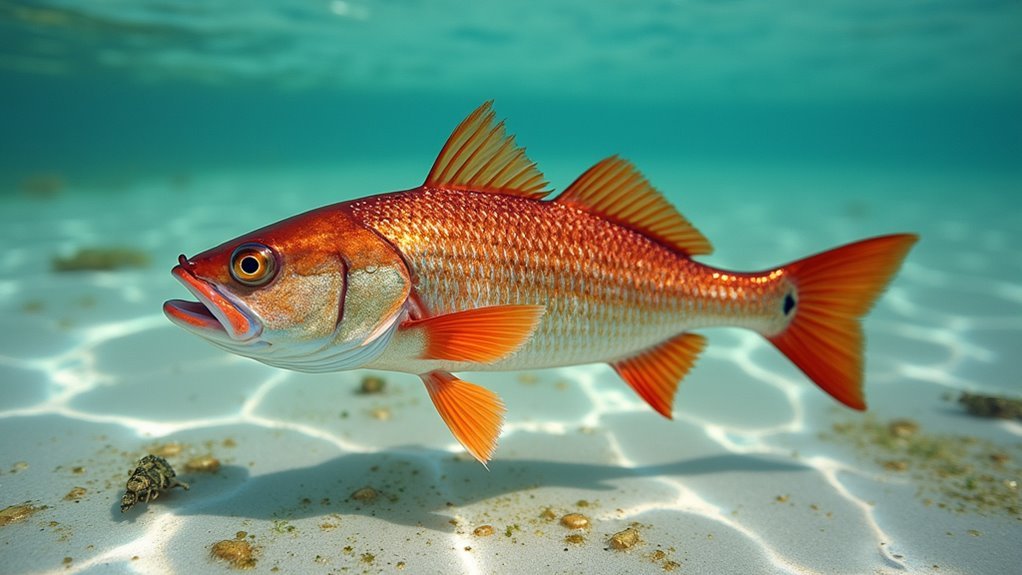
The bronze warrior of the shallows, the redfish, represents one of the most sought-after game fish along the Atlantic and Gulf coasts.
Perhaps their most distinctive feature is that tell-tale black spot near the tail—nature’s way of confusing predators about which end is which.
Most anglers encounter redfish in the 11-24 inch range, their coppery-golden scales flashing in shallow waters.
These opportunistic feeders tend to travel in small packs of three to five, particularly around structures like oyster beds and grass flats.
They’re quite adaptable, I think, shifting their diets seasonally between crustaceans and smaller fish.
Prime Habitats and Seasonal Movements
Redfish sanctuaries stretch across a diverse tapestry of coastal environments, from shallow grass flats to deep channel edges.
These opportunistic predators gravitate toward structure—oyster beds, docks, jetties, and grass beds provide both shelter and hunting grounds.
Perhaps the most telling aspect of their behavior is their seasonal migration.
During warmer months, they’ll typically venture into shallower waters where anglers might spot them tailing at dawn and dusk.
As temperatures drop, they’ll shift toward deeper holes in estuaries, often in small packs of three to five fish.
I think understanding these movements is vital for any angler hoping to consistently land these copper-scaled beauties.
Essential Gear and Tackle Selection
When selecting the proper equipment for redfish fishing, anglers should focus on versatility and durability above all else. A medium-action 7-foot rod paired with a 3000 or 4000-size reel strikes the perfect balance for most situations.
Braided line is generally preferred, perhaps with a monofilament leader for some added stealth.
Essential tackle should include a variety of weights, from popping corks to Carolina rigs.
I think the five most effective choices remain popping corks, crankbaits, Carolina rigs, soft plastics, and topwater lures. Each serves different water column positions, allowing anglers to adapt to where redfish are actively feeding.
Proven Fishing Techniques Across Water Columns
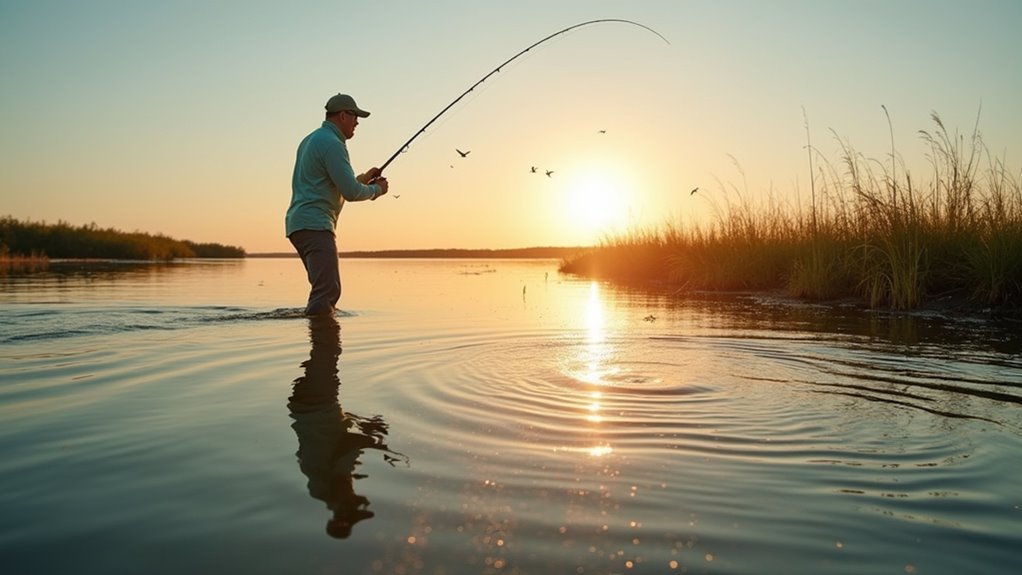
Successfully targeting redfish requires mastering techniques across different water columns, as these adaptable fish change their feeding patterns based on conditions and seasons.
Bottom fishing with Carolina rigs and natural baits like crabs or shrimp often yields results, as redfish are primarily bottom feeders.
Mid-column approaches using popping corks position bait perfectly where redfish cruise, perhaps combining scent, sound, and visual attraction. I think this versatility makes popping corks a top choice among anglers.
For an exciting experience, topwater fishing with chuggers or rattling lures can trigger explosive strikes when conditions are right.
The key is matching your technique to where redfish are actively feeding.
Best Locations and Times for Maximum Results
Finding the right location at the ideal time represents perhaps the greatest factor in redfish angling success. Seasonal patterns dictate where these copper-scaled predators gather, with shallow waters being particularly productive during warmer months.
| Season | Best Time | Prime Location |
|---|---|---|
| Spring | Mid-morning | Grass flats, sun-warm shallows |
| Summer | Dawn/Dusk | Structure near jetties, oyster beds |
| Fall | Tidal movements | Mangroves, estuaries |
Winter fishing requires patience and timing, as redfish seek deeper holes when cold but will sun themselves in shallows on warmer days. I think tidal movements, regardless of season, almost always increase feeding activity—especially around structures that concentrate baitfish.
Conservation Practices and Fishing Regulations
Although recreational anglers may be focused on the thrill of the catch, responsible stewardship of redfish populations requires understanding and following conservation regulations. Each Gulf and Atlantic state maintains specific rules that help protect this valuable species for future generations.
Conservation isn’t just ethical—it’s essential for ensuring redfish thrive for generations of anglers to come.
I think most anglers would agree that conservation is perhaps just as important as the catch itself.
- Obtain proper fishing licenses, which vary by state and often require separate saltwater endorsements
- Adhere to size limits (typically 18-27 inches) and daily bag restrictions
- Practice catch and release techniques when possible, using circle hooks to reduce mortality
- Stay informed about seasonal closures designed to protect spawning aggregations
Frequently Asked Questions
How Do Redfish Respond to Changing Barometric Pressure?
Redfish become more active during stable or gradually falling barometric pressure. When pressure drops rapidly before storms, they often feed aggressively. Rising pressure typically causes them to become less active and move deeper.
Can Redfish Be Caught in Freshwater Environments?
“Fish out of water” aptly describes redfish in freshwater. While primarily saltwater species, they occasionally venture into freshwater environments during migrations or when seeking food, but they aren’t true freshwater inhabitants.
What’s the Average Fighting Time When Landing a Trophy Redfish?
Trophy redfish typically require 10-20 minutes to land depending on size, gear strength, angler experience, and water conditions. Larger specimens over 30 inches may demand longer fights approaching 30 minutes.
Do Redfish Taste Better Than Other Popular Game Fish?
Contrary to some beliefs, redfish doesn’t universally surpass other game fish in flavor. Its mild, sweet taste with medium flakiness compares favorably to snapper or trout but remains a matter of personal preference.
How Can I Differentiate Between Redfish and Black Drum?
Redfish have coppery golden scales with a black spot near the tail, while black drum have multiple barbels under their chin and display vertical black stripes when young that fade with age.