Yes, bass is both safe and delicious to eat! We’ve found it’s an excellent source of lean protein with about 15 grams per fillet. While you’ll want to limit consumption to six fillets monthly due to mercury levels, proper preparation makes all the difference. We always rinse our catch thoroughly and ice it immediately. From the buttery richness of sea bass to the sweeter flavor of smallmouth, each species offers its own unique taste adventure. Stick around to discover our favorite cooking techniques for this versatile fish.
Health Benefits of Eating Bass Fish
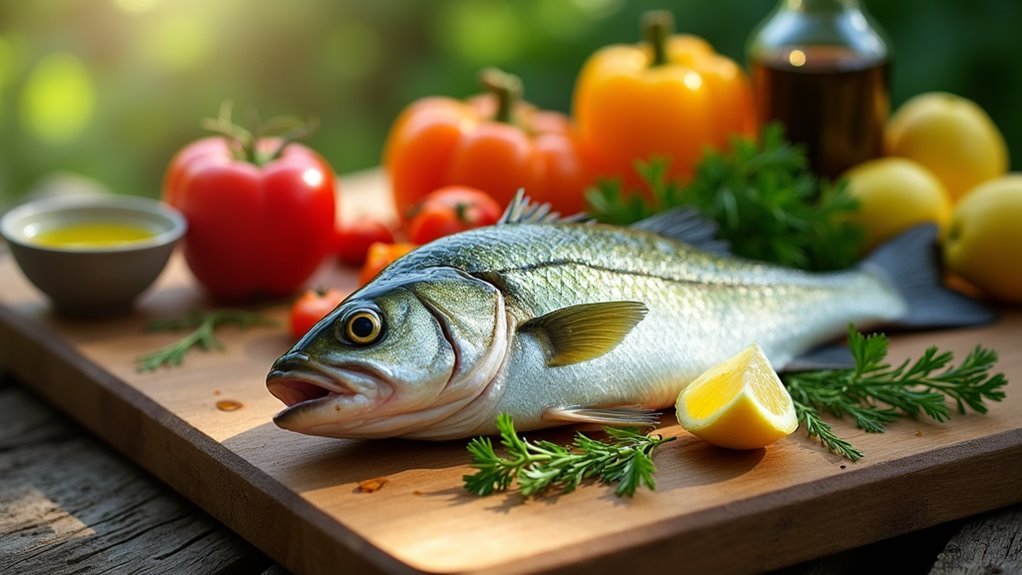
When it comes to healthy eating options, bass fish often swims under the radar compared to popular choices like salmon or tuna. But let me tell you, after years casting lines in lakes across the country, bass deserves more recognition on your dinner plate!
We’ve found bass to be an excellent source of lean protein, packing about 15 grams in a single 62-gram fillet. It’s also remarkably low in fat and calories, making it perfect for health-conscious folks. I remember catching a beautiful smallmouth in Minnesota that fed my family with nutritious meat without weighing down our waistlines. Just remember to limit intake to six fillets monthly due to trace mercury levels.
Mercury Safety Guidelines for Bass Consumption
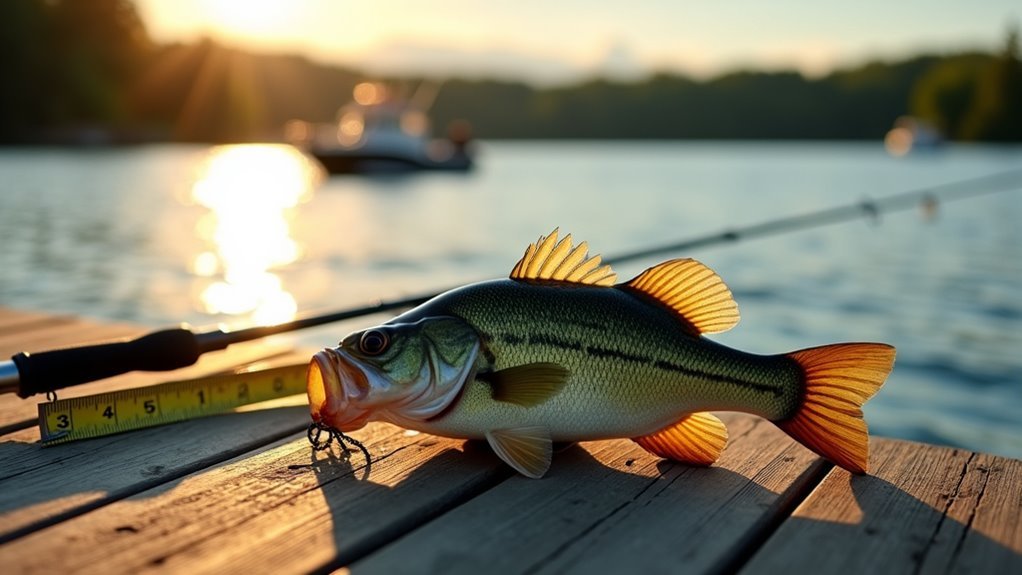
Although bass offers excellent nutrition, we can’t ignore the mercury factor when enjoying this popular gamefish. Most health experts recommend limiting bass consumption to six fillets monthly for adults. This isn’t just bureaucratic nonsense—I’ve seen what mercury buildup can do firsthand.
Pregnant women need extra caution, sticking to six 6-ounce servings monthly. Chilean sea bass carries even higher mercury levels, so cap it at 18 ounces per month.
Remember when fishing Lake Michigan years back? Local advisories saved us from a potentially toxic meal. Always check regional guidelines—mercury levels vary dramatically between bodies of water.
Proper Storage and Preparation to Prevent Bacteria
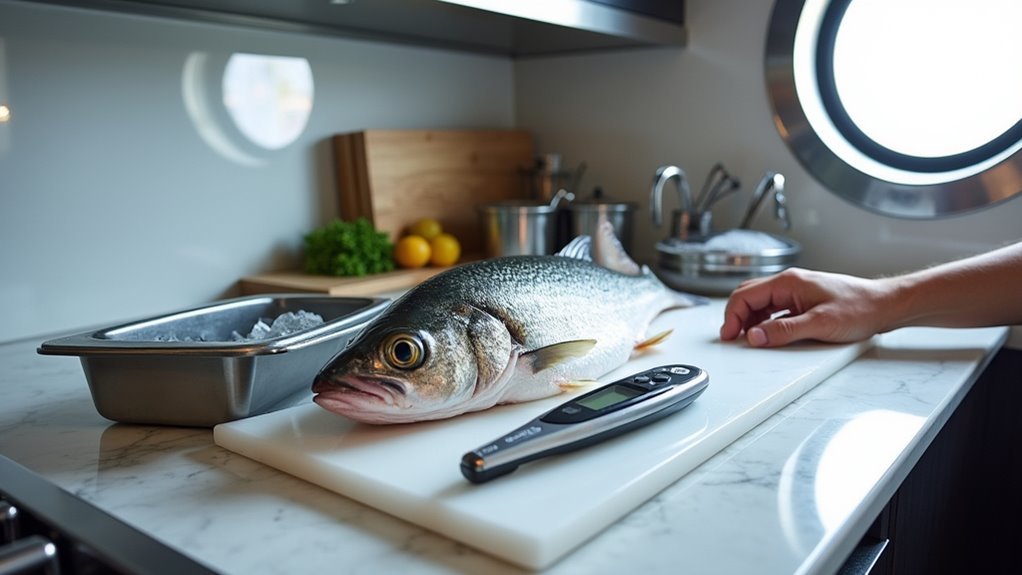
Proper catching-to-cooking care makes all the difference between a delicious bass dinner and a trip to the emergency room. We’ve learned this lesson the hard way on fishing trips!
When you land a keeper, rinse it thoroughly, wrap in plastic, and place it on ice immediately. Don’t let those fillets sit in your fridge longer than 2-3 days. I once left bass too long and regretted it for days afterward.
Always cook bass to at least 145°F internal temperature. Remember how bacteria love warm environments? That’s why we’re so careful when prepping our catch – especially for pregnant women who need to avoid listeria.
Flavor Profiles of Different Bass Species
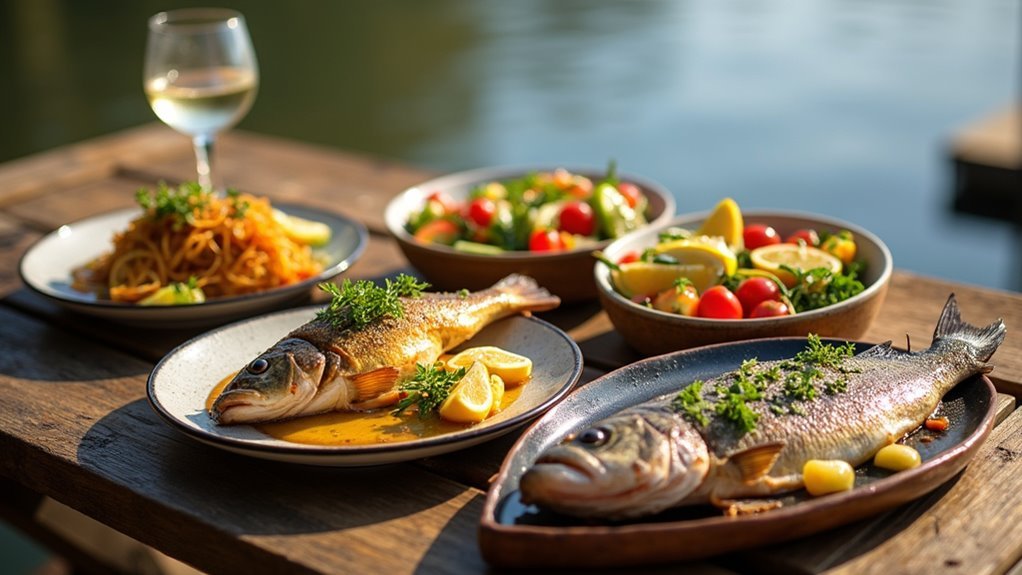
Not all bass taste the same, which might surprise you if you’ve only tried one variety. In our fishing adventures, we’ve found largemouth bass has that distinctive fishy flavor that’s a bit stronger than others. It’s firm but not everyone’s cup of tea.
Smallmouth bass offers a sweeter profile with less fishiness. We’ve caught these in rocky streams and they’re always a treat.
Smallmouth bass delivers a sweeter, cleaner flavor – a genuine delicacy when pulled fresh from rocky stream beds.
Spotted bass? They’re our secret favorite – finer texture and milder taste, especially from clear waters.
And sea bass is the star with its rich, buttery character and tender flesh.
Essential Bass Cooking Techniques
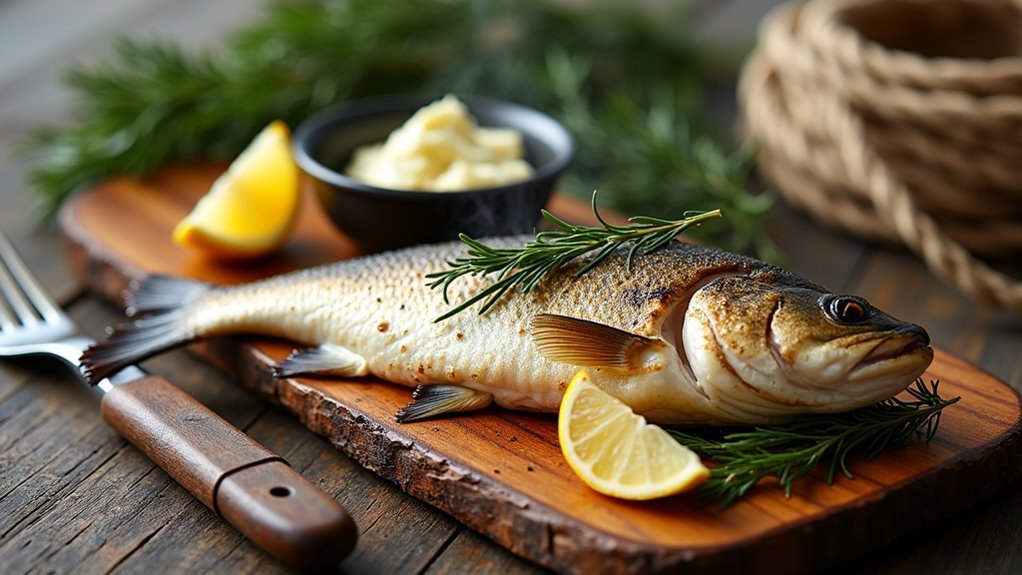
Mastering the right cooking techniques transforms bass from ordinary to extraordinary. We’ve found that pan-grilling creates a perfect crispy exterior while keeping the flesh moist. Remember to score the skin before cooking – a trick I learned after losing a prize fillet to curling!
For whole bass, baking at 400°F for 25-30 minutes yields impressive results. The skin turns wonderfully crispy while herbs inside the cavity infuse throughout.
Don’t overlook traditional fish-fry methods either. A cornmeal coating fried at exactly 375°F brings back memories of lakeside suppers after a long day casting lines.
Delicious Bass Recipes and Flavor Variations
While pan-grilling and frying deliver excellent results, we’ve discovered that bass truly shines when you experiment with different flavor profiles. During our fishing trips in Minnesota, we’ve tried countless combinations that transform this versatile fish.
| Flavor Profile | Key Ingredients | Cooking Method | Difficulty | Pairings |
|---|---|---|---|---|
| Mediterranean | Olives, lemon, herbs | Baked whole | Easy | White wine |
| Asian | Ginger, soy, scallions | Steamed | Medium | Rice |
| Southern | Cornmeal, paprika | Deep fried | Easy | Coleslaw |
| Cajun | Blackening spice | Grilled | Medium | Corn |
| Herb-Butter | Thyme, garlic butter | Pan-seared | Easy | Roasted potatoes |
Remember when we caught those smallmouths at dawn? They tasted incredible with just butter and herbs!
Frequently Asked Questions
Can Children Safely Eat Bass Fish?
Children can eat bass, but we recommend limiting their portions due to mercury concerns. We’d suggest smaller servings than adults and carefully following local fish advisories for the water bodies in your area.
How Do You Identify Fresh Bass at the Market?
Looking for fresh bass? We check for clear, bright eyes, shiny scales, and firm flesh that springs back when pressed. We also notice a mild, ocean-like smell—fresh bass should never have a strong fishy odor.
Are Farmed Bass Safer Than Wild-Caught Bass?
We generally find farmed bass contain less mercury than wild-caught, making them safer in that respect. However, wild-caught often have better flavor and fewer antibiotics. Both are safe when properly sourced and prepared.
Can You Freeze Bass Fish for Later Consumption?
Yes, we can freeze bass fish for later consumption. We recommend cleaning, wrapping it tightly in plastic wrap or freezer paper, and using it within 3-6 months for the best flavor and texture.
Does Bass Fishing Location Affect Its Taste?
We’d swear location doesn’t matter, but we’d be lying! Bass from clear, clean waters taste noticeably sweeter and less fishy than those from murky environments. Their diet directly affects their flavor profile.
Conclusion
Bass has truly been our loyal companion from lake to plate throughout countless fishing seasons. Like that time our boat nearly capsized during a storm, yet we still managed to reel in a trophy largemouth—bass is resilient and rewards patience. When properly handled and cooked, it’s both safe and delicious. We’ve enjoyed this versatile fish for decades, and with the right preparation, you’ll create memorable meals that’ll have everyone asking for seconds.