Most boat owners don’t realize that lithium marine batteries can actually enter a protective “deep sleep” mode during extended cold storage. We’re talking about a built-in safety feature that fundamentally shuts down the battery when temperatures drop too low. Here’s the thing though – whether you can leave them in your boat over winter isn’t just about this sleep mode. There’s a whole checklist of conditions that need to be met, and frankly, getting it wrong could cost you.
Understanding Lithium Marine Battery Winter Storage Requirements
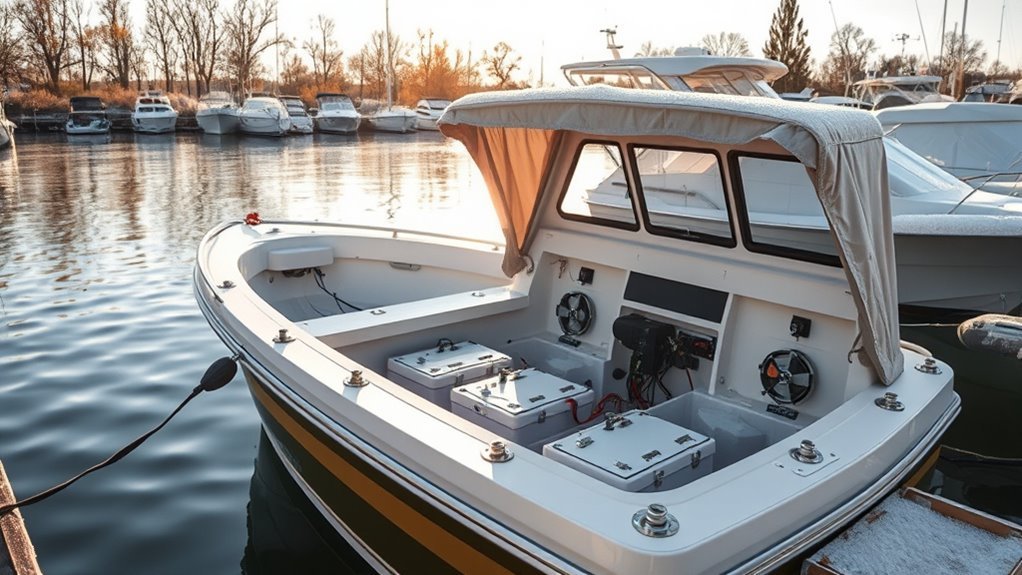
When winter rolls around, we’re all wondering the same thing: can we just leave our lithium marine batteries in the boat and call it good? Here’s the deal. Lithium marine batteries are tough cookies.
They’re sealed tight and don’t throw tantrums when temperatures drop. Unlike their lead-acid cousins, they won’t crack or suffer winter draining issues if kept above 25°F. That’s roughly -4°C for our metric friends.
But here’s where it gets interesting. These batteries lose only 2-3% charge monthly above freezing. Pretty impressive, right? Proper storage solutions, like battery insulation, provide an extra layer of protection in extreme cold.
However, battery insulation becomes indispensable when temps plummet below -15°F. At that point, even these hardy units need indoor pampering.
The key? Keep them charged and disconnect them completely. No exceptions.
Temperature Considerations for Cold Weather Battery Storage
When we’re talking about keeping your lithium marine batteries alive through winter, temperature isn’t just important—it’s everything. Most LiFePO4 batteries can handle storage temps down to -20°F without breaking a sweat. But here’s the kicker: you can store them in the cold, just don’t try charging them when they’re frozen solid. Proper battery maintenance during storage helps preserve their lifespan and performance. We need to understand both the safe storage ranges and why cold weather charging will turn your expensive battery into an expensive paperweight.
Safe Storage Temperature Ranges
Although we’d all love to pretend our lithium marine batteries are as tough as we are during winter, they’re actually pretty picky about temperature. Most manufacturers spec storage down to 0°C (32°F), though some LiFePO4 batteries can handle -20°C (-4°F). That’s storage, not charging—different story entirely.
Here’s the thing: keeping batteries above 25°F during storage minimizes capacity loss. Battery insulation and thermal blankets can help maintain stable temperatures in unheated spaces. Cold won’t kill them immediately, but it’s not doing any favors either. Proper battery temperature management is essential to extend the life and performance of your marine batteries during winter storage.
Cold Weather Charging Risks
Charging lithium batteries in freezing temps isn’t just inadvisable—it’s battery suicide. When temperatures drop below 32°F, internal resistance skyrockets and capacity plummets.
We’re talking irreversible damage here, folks.
Most lithium batteries tap out around -4°F for charging limits. Go below that? You’re asking for trouble.
The good news is that modern batteries often come with BMS systems that’ll shut down charging automatically when things get too cold.
Storage without charging is fine—it’s the charging part that kills them.
If you absolutely must charge in winter, battery insulation becomes your best friend.
Keep those charging cables accessible but warm the battery first.
Better yet, bring the whole thing inside. Your wallet will thank you.
In cold weather, proper storage and handling are crucial to prevent damage.
Preparing Your Lithium Batteries for Extended Winter Storage
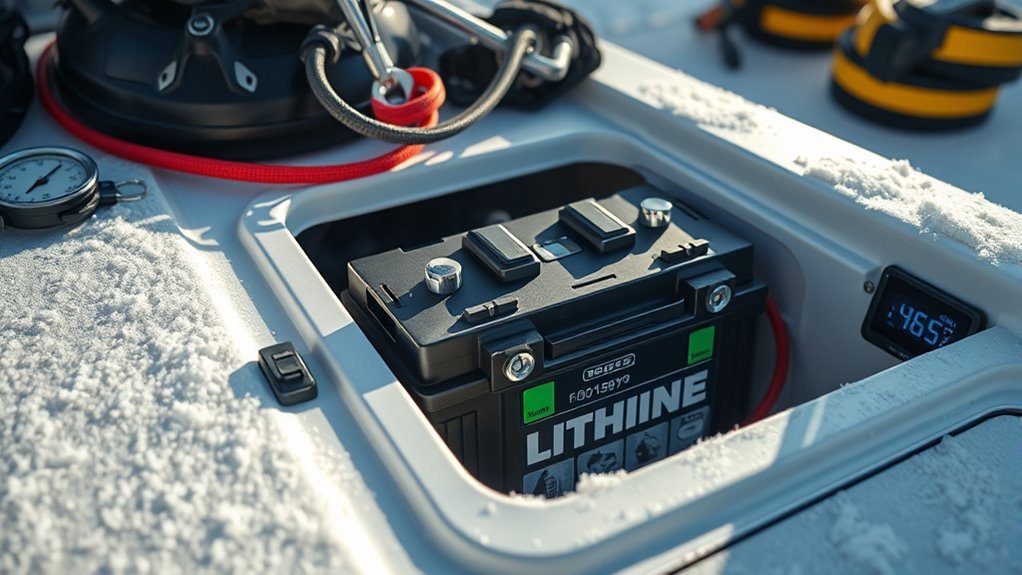
Before we tuck these expensive power cells away for their winter nap, we need to get them properly prepped—because nobody wants a dead battery surprise come spring. Getting your lithium marines to the right charge level isn’t rocket science, but it’s vital for keeping them healthy during months of cold storage.
We’ll also need to activate that deep sleep mode, which sounds fancy but basically just tells your battery to stop burning through power while it sits there doing nothing.
Optimal Charge Levels
When winter’s knocking at the door, we can’t just toss our lithium marine batteries into storage and hope for the best. Here’s the thing about charge levels—they matter. A lot.
We need to charge these babies to 90-100% before winter hits. Yeah, you heard that right. Full charge. Some folks think 50-60% is fine for short-term storage, but we’re talking extended winter here. Deep discharge during storage? That’s a battery killer.
Storing below 50%? Don’t even think about it. That’s how we accelerate capacity degradation, and nobody wants that headache come spring.
Battery insulation and corrosion prevention are essential, but they’re worthless if our charge levels are wrong. Check your manufacturer’s specs. They know their battery chemistry better than anyone.
Deep Sleep Activation
Now that we’ve got our batteries charged up nice and full, there’s one more trick up our sleeve that’ll make winter storage a breeze. Deep Sleep mode. It’s basically hibernation for your lithium battery.
You can activate it through the Norsk Guardian App by tapping “Enter Deep Sleep.”
Too high-tech for you? Fine. Hold the Power Management button until three indicator lights show up. Done.
This mode eliminates parasitic drain completely. No maintenance charging needed all winter long. Your battery stays at stable voltage, protected from over-discharging.
Add some battery insulation and moisture protection around the terminals, and you’re golden.
Come spring? Just hit “Wake Battery” in the app or press that button once. Simple as that.
Deep Sleep Mode and Battery Management Systems
Since most boat owners dread the thought of dead batteries come spring, Deep Sleep Mode feels like a game-changer.
Here’s the thing: your Battery Management System doesn’t just shut off and call it a day. It keeps working behind the scenes, monitoring charge levels, voltage, and temperature like a diligent watchman.
The BMS handles battery insulation and thermal management, ensuring your lithium cells stay within safe parameters even when temperatures drop.
No parasitic drain. No gradual death spiral. The system maintains safety protocols while preserving your battery’s state of charge throughout winter’s harsh months.
When spring arrives, you’ll wake up your battery through the app or power button—and boom, full functionality restored instantly.
Charging Restrictions During Freezing Temperatures

While your lithium batteries can handle freezing temps just fine, charging them in the cold is where things get dicey. Below 32°F, you’re basically asking for trouble. The chemistry just doesn’t work properly when it’s freezing.
Here’s what happens when temperatures drop:
- Permanent capacity loss – charging below -4°F can wreck your battery for good
- BMS protection kicks in – most systems automatically disable charging when it’s too cold
- Irreversible damage occurs – the cells get damaged at a molecular level
Smart manufacturers build in safety features because, frankly, people ignore warnings. Your BMS will shut down charging to protect the investment.
Battery insulation and frost prevention become vital if you’re storing batteries where temperatures fluctuate. The bottom line? Don’t charge frozen batteries.
When to Remove Batteries vs. Leaving Them Installed
Once winter storage rolls around, you’re faced with a choice that’ll make or break your battery’s lifespan. Keep them installed? Sure, if temps stay above 25°F.
Below -15°F? Get those batteries out of there, fast.
Here’s the deal: leaving them in is convenient, but only if you charge them fully first. Nobody wants capacity loss because they got lazy. Disconnect from the electrical system though – parasitic draws are sneaky little power vampires.
Battery insulation helps if you’re keeping them aboard. But honestly? Temperature-controlled indoor storage wins every time.
Portable chargers make maintenance easier when batteries are inside your garage. The choice boils down to your winter climate and how much effort you’re willing to put in.
Spring Activation and Battery Maintenance Tips

When spring finally arrives, waking up your lithium marine batteries is ridiculously simple – just tap that app or hit the Power Management button. Most batteries wake within moments, assuming you didn’t screw up winter storage.
Here’s your spring checklist:
- Verify storage conditions – batteries stored above 25°F with full charge should wake easily
- Check BMS functionality – confirm it’s protecting against over-voltage and temperature extremes
- Monitor voltage restoration – properly stored batteries return to previous levels almost instantly
Chemistry considerations matter here. Lithium’s 2-3% monthly self-discharge means you probably won’t need recharging if storage was done right.
The BMS does the heavy lifting on startup protection.
Check your warranty implications too – improper activation can void coverage faster than you’d think.
Frequently Asked Questions
Can I Leave My Lithium Batteries in My Boat Over the Winter?
Yes, you can leave lithium batteries in your boat over winter. We recommend ensuring proper battery charging beforehand and maintaining temperature regulation above 25℉. Disconnect them from electrical systems to prevent drain.
How to Store a Lithium Battery Over the Winter?
Lithium batteries lose 5% capacity monthly in freezing temps. We’ll store yours fully charged with proper battery insulation, disconnect from systems, and avoid cold weather charging below 32°F for maximum longevity.
Is It Okay to Leave Lithium Batteries in the Cold?
Yes, we can safely leave lithium batteries in cold temperatures down to -20°F when disconnected. Cold climate storage won’t damage them like lead-acid batteries, though proper battery recycling matters when they eventually reach end-of-life.
How to Store Lithium Boat Batteries?
Picture your batteries slowly dying in freezing darkness—we’ll prevent that nightmare. Store them fully charged, disconnected from any type of charger, in temperatures above 25°F to maintain battery capacity and longevity.