Let's explore the complex relationship between freshwater trolling motors and saltwater environments. While we've heard many anglers ask if they can use their freshwater motors in salt water, the answer isn't a simple yes or no. The reality involves understanding essential design differences, potential risks, and necessary maintenance trade-offs. Whether you're considering using your existing freshwater motor in saltwater or weighing the cost benefits of different options, there's more to this decision than meets the eye. The choices you make now could greatly impact your equipment's longevity and performance.
Understanding the Key Design Differences
While freshwater and saltwater trolling motors may look similar at first glance, they're built quite differently under the surface.
Let's explore these key design differences that make each type unique. In saltwater motors, we'll find extensive corrosion-resistant materials and protective coatings that shield crucial components from harsh marine environments.
They're equipped with specialized stainless steel components and superior electronics sealing that you won't typically see in freshwater models.
We've noticed that freshwater trolling motors lack these essential protective features, which can lead to serious problems if used in saltwater.
It's not just about performance – warranty issues often arise when freshwater motors are used in the wrong environment.
Understanding these design differences helps us make the right choice for our boating adventures.
Risks and Performance Challenges
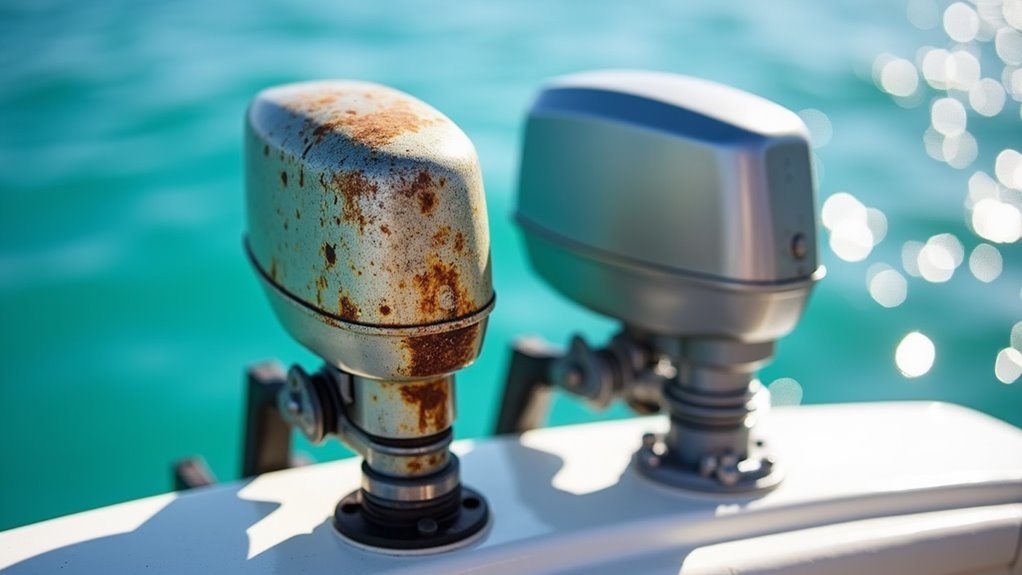
Although freshwater trolling motors can technically operate in saltwater, they face severe risks that can compromise their performance and longevity. When we use a freshwater motor in saltwater environments, we're looking at significant performance challenges that can't be ignored. The harsh conditions quickly lead to corrosion and mechanical failures, even with careful maintenance.
| Risk Factor | Impact | Solution |
|---|---|---|
| Corrosion | Motor damage | Regular rinsing |
| Salt buildup | Seal failure | Protective coating |
| Water exposure | Shortened life | Proper storage |
We've seen that while some boaters get lucky with extended longevity through diligent care, most freshwater motors struggle in saltwater conditions. It's worth noting that using these motors in saltwater typically voids the warranty, leaving us vulnerable to costly repairs or replacements.
Maintenance Requirements for Saltwater Use
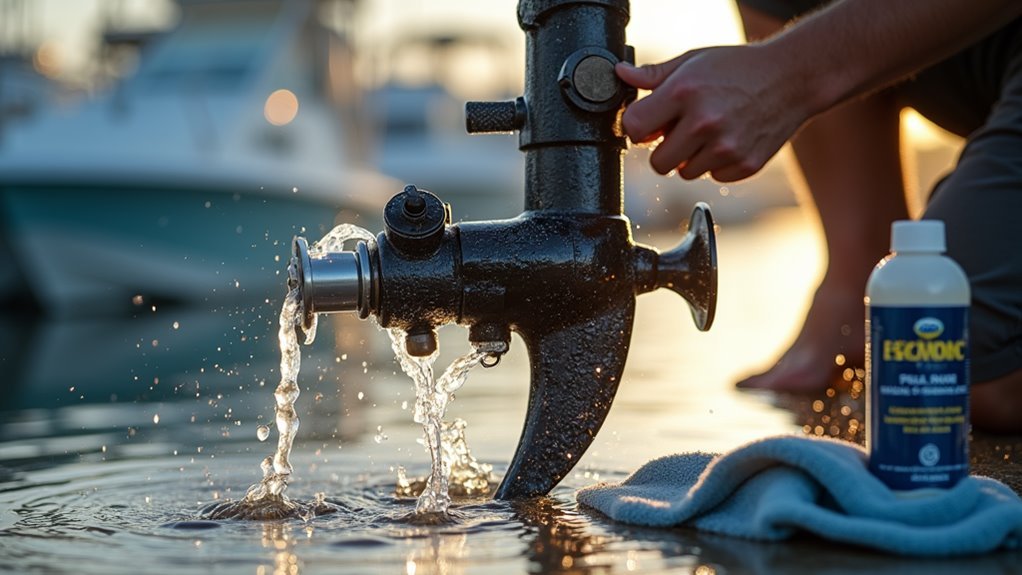
To protect a freshwater trolling motor in saltwater conditions, we'll need to follow specific maintenance requirements.
After every saltwater adventure, we've got to thoroughly rinse our motor with fresh water to prevent damaging salt buildup. Don't skip this vital step – it's your motor's first line of defense!
For extra corrosion protection, we'll want to apply protective sprays like WD-40 or specialized coatings.
Regular inspection of the lower unit and shaft is essential, and using products like SaltAway will help remove stubborn salt deposits.
Here's a pro tip: upgrade your mounting hardware to stainless steel parts. They'll resist rust better and keep your freshwater motor running smoothly in saltwater environments.
With proper cleaning and maintenance, we can remarkably extend our motor's life while enjoying the freedom of saltwater fishing.
Real User Success Stories
Since countless anglers have shared their success stories, we're excited to highlight how freshwater trolling motors can thrive in saltwater environments.
One remarkable example is a Minn Kota Vantage that's been conquering saltwater conditions for years with proper care. We've heard from boaters who've kept their 55lb Minn Kota Edge running strong in Aransas Bay, proving that consistent maintenance makes all the difference.
What's truly inspiring is how many freshwater motors have lasted over six years in saltwater with the right attention.
While corrosion can affect metal components, dedicated cleaning after each use has helped countless motors perform reliably.
These success stories show that with proper maintenance, your freshwater trolling motor can handle saltwater adventures just fine.
Cost Analysis and Value Assessment
While success stories highlight reliability, let's examine the financial impact of using freshwater trolling motors in saltwater environments.
When we look at the numbers, we're faced with an interesting choice: saltwater-specific motors cost 3-5 times more than freshwater models, but they offer superior corrosion-resistant features.
Our cost-benefit analysis shows that choosing a freshwater motor could save money upfront, but we need to weigh long-term maintenance expenses.
Although saltwater models offer enhanced durability, our value assessment suggests the best choice depends on your specific situation.
If you're an occasional saltwater user who's diligent about maintenance, a freshwater motor might serve you well.
However, frequent saltwater anglers may find the investment in a specialized motor more economical over time, thanks to reduced repair costs.
Frequently Asked Questions
Do You Need a Special Trolling Motor for Saltwater?
We'll definitely want a saltwater-specific trolling motor since saltwater corrosion can destroy standard motors. Don't risk performance differences or shortened battery lifespan – invest in proper saltwater-rated equipment for worry-free fishing.
Can I Use a Freshwater Motor in Saltwater?
We're free to use freshwater motors in saltwater, but we'll trade longevity for savings. Regular motor maintenance and thorough rinsing fight corrosion, though saltwater compatibility concerns remain without proper marine coatings.
What Is the Difference Between a Freshwater and a Saltwater Trolling Motor?
We'll find saltwater motors have better corrosion resistance, stainless-steel parts, and enhanced seals, while freshwater motors offer lower costs but less durability. Both types maintain similar performance and battery requirements.
Can You Use an Electric Trolling Motor in Saltwater?
We can use electric trolling motors in saltwater, but we'll need proper maintenance to combat corrosion. Though freshwater motors work, saltwater-specific models offer better durability and longer lifespan despite higher costs.