We’ve battled fish smell on our hands for decades after Lake Michigan fishing trips. The culprit? Trimethylamine compounds that cling stubbornly to skin. Try rubbing your hands with salt and vinegar, baking soda paste, or even toothpaste to break down those smelly compounds. Stainless steel “soap” bars work surprisingly well too. Our favorite trick is keeping lemon juice in the tackle box for quick cleanup. These simple solutions will keep your hands fresh for the dinner table.
Why Fish Leaves That Stubborn Smell

When you’ve just landed that prized bass or trout, the thrill of the catch quickly gives way to an unwelcome souvenir—that stubborn fish smell clinging to your hands.
Some of the links in this article may be affiliate links. If you make a purchase through these links, we may earn a small commission at no extra cost to you. Thank you.
That moment of fishing glory quickly fades when you realize your hands now reek like the lake bottom.
We’ve all been there! The culprit? For freshwater fish, it’s compounds from decomposing organic matter. Those little microorganisms called Actinomycetes are major offenders too.
Saltwater fish are different—they contain trimethylamine oxide that breaks down after the fish dies. That’s why the smell gets worse as time passes.
Trust me, after 30 years of fishing Lake Michigan, I’ve learned this science the hard way!
Quick Remedies Using Household Items
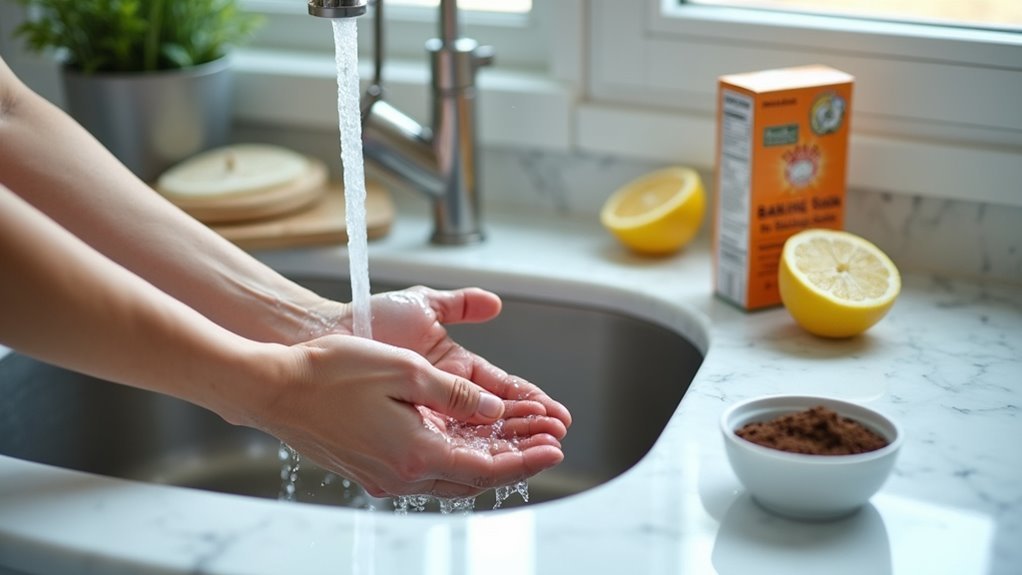
Three household heroes sit right in your kitchen cabinet, ready to wage war on that persistent fish smell! We’ve used these trusty allies after countless fishing trips, and they work like a charm. Don’t waste money on fancy products when these simple solutions are just an arm’s reach away.
- Salt and vinegar mixture breaks down those smelly compounds fast – we’ve saved many dinner parties with this quick fix
- Baking soda paste neutralizes odors at the pH level – works wonders even after landing that stubborn catfish
- Toothpaste’s gentle scrubbing action removes smell without harming skin – our go-to after early morning catches
Commercial Products That Actually Work

Several commercial fish odor removers have earned their place in our tackle boxes over years of testing on lakes and oceans nationwide. We’ve found that stainless steel “soap” bars work surprisingly well—just rub under running water to neutralize those stubborn smells after handling that monster bass.
Lemon-based hand gels like “Fisherman’s Friend” break down oils better than regular soap. After a particularly smelly day catching catfish in Tennessee, we discovered “De-Fishing Soap” with activated charcoal that pulls odors right out of your skin. Worth every penny when you’re heading straight from the dock to dinner!
Prevention Tips for Future Fishing Trips

The best defense against fishy hands actually begins before you ever touch a scale or fin. We’ve learned this lesson after countless days on the water! Planning ahead can save you from that telltale smell following you home.
- Wear nitrile gloves when handling fish – they’re thin enough for dexterity but create a barrier against odor
- Bring a small bottle of lemon juice in your tackle box to quickly neutralize smells
- Pack hand wipes with alcohol or special fish-odor formulas for immediate cleaning
Frequently Asked Questions
Can Fish Smell Affect the Taste of Food You Prepare?
Yes, we’ve found that fish smell on our hands can transfer to food we prepare, affecting its taste. Strong fish odors contaminate other ingredients through touch.
How Long Does Fish Odor Typically Last on Untreated Skin?
Fishy fragrances frequently linger for 24-48 hours on untreated skin. We’ve found that without proper cleaning, these odors can persist through multiple hand washings, especially with oilier fish species.
Does Water Temperature Affect How Quickly Fish Smell Sets In?
Yes, water temperature directly impacts fish smell onset. In warmer water, bacteria multiply faster, causing quicker decomposition and stronger odors. We’ll notice fish caught in hot conditions smelling worse sooner.
Are Certain Fish Species Known to Leave Less Odor?
Yes, some fish leave less odor. White-fleshed fish like tilapia, cod, and haddock have milder smells than oily species like salmon, mackerel, or tuna that contain more trimethylamine oxide.
Can Repeated Exposure to Fish Oils Cause Permanent Skin Odor?
We’re happy to confirm that repeated exposure to fish oils won’t cause permanent skin odor. While temporary buildup can occur, regular hand washing with proper techniques effectively removes these oils completely.
Conclusion
Just like the time we caught that monster pike and couldn’t get the smell off for days, we’ve all wrestled with fishy hands. Whether you’ve used lemon juice, stainless steel, or our recommended commercial products, you’re now equipped to enjoy fishing without the smelly aftermath. Next time you’re reeling in that trophy catch, you’ll know exactly how to keep your hands fresh—letting only the memories of your adventure linger, not the odor.